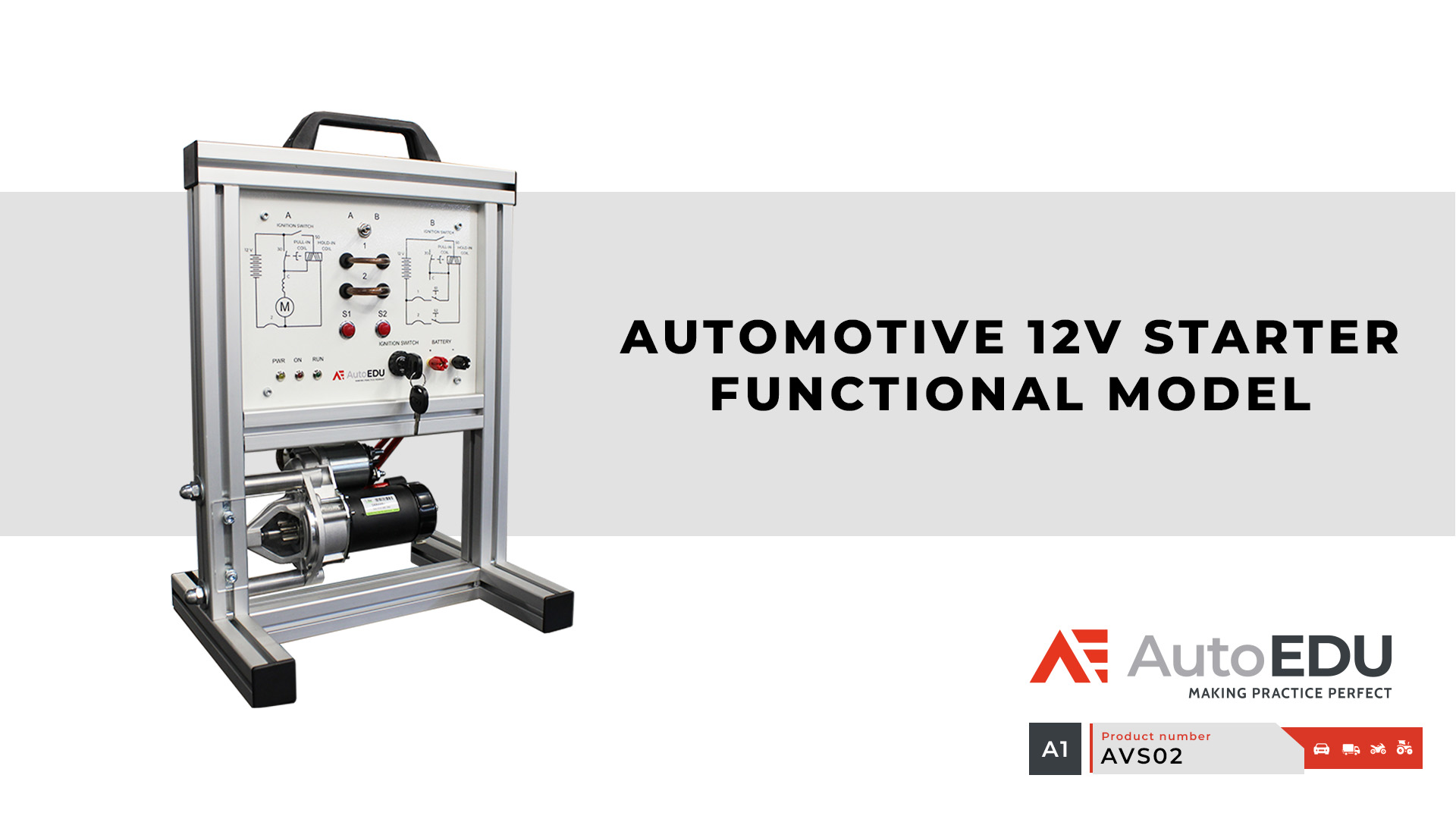
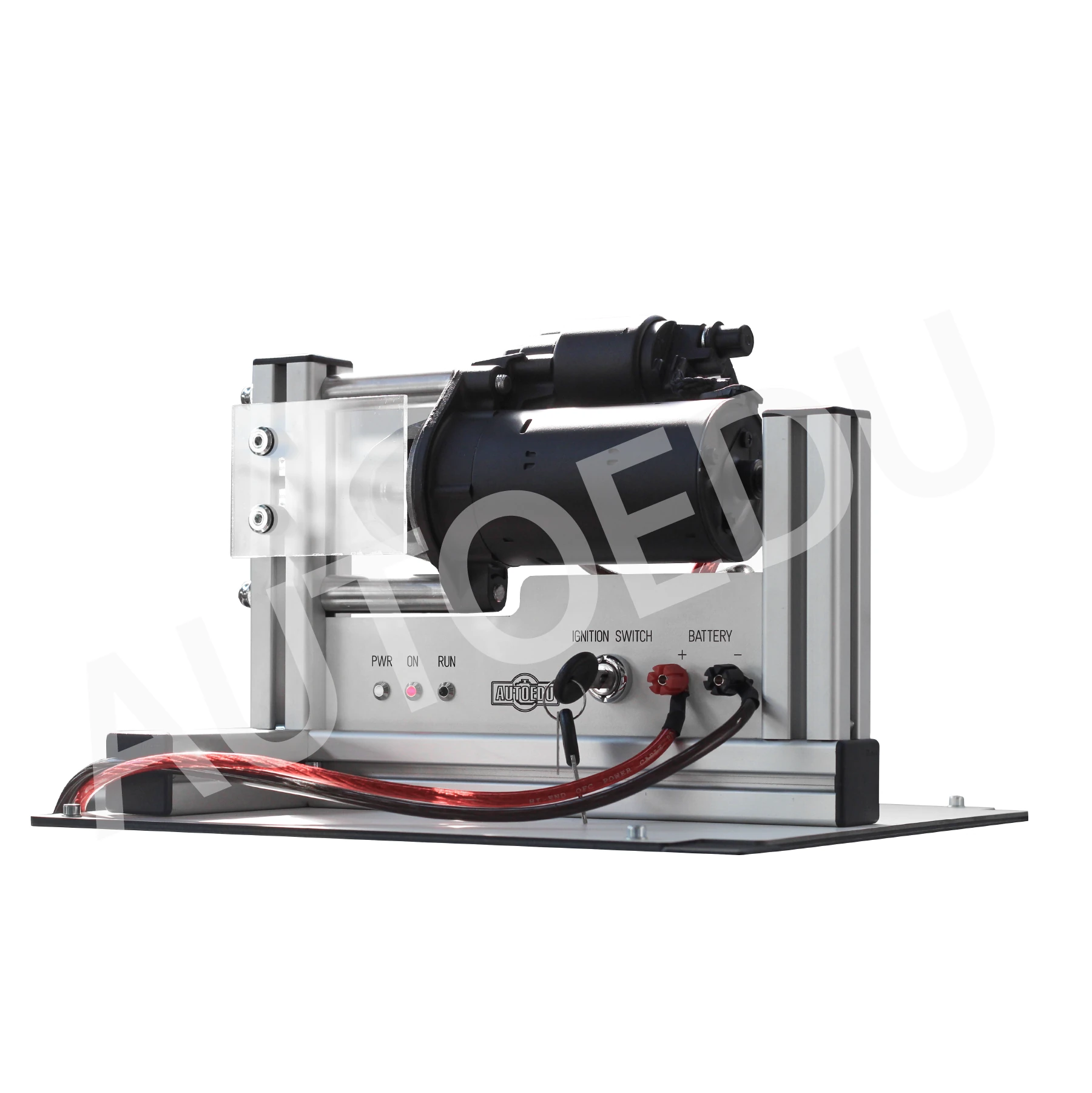
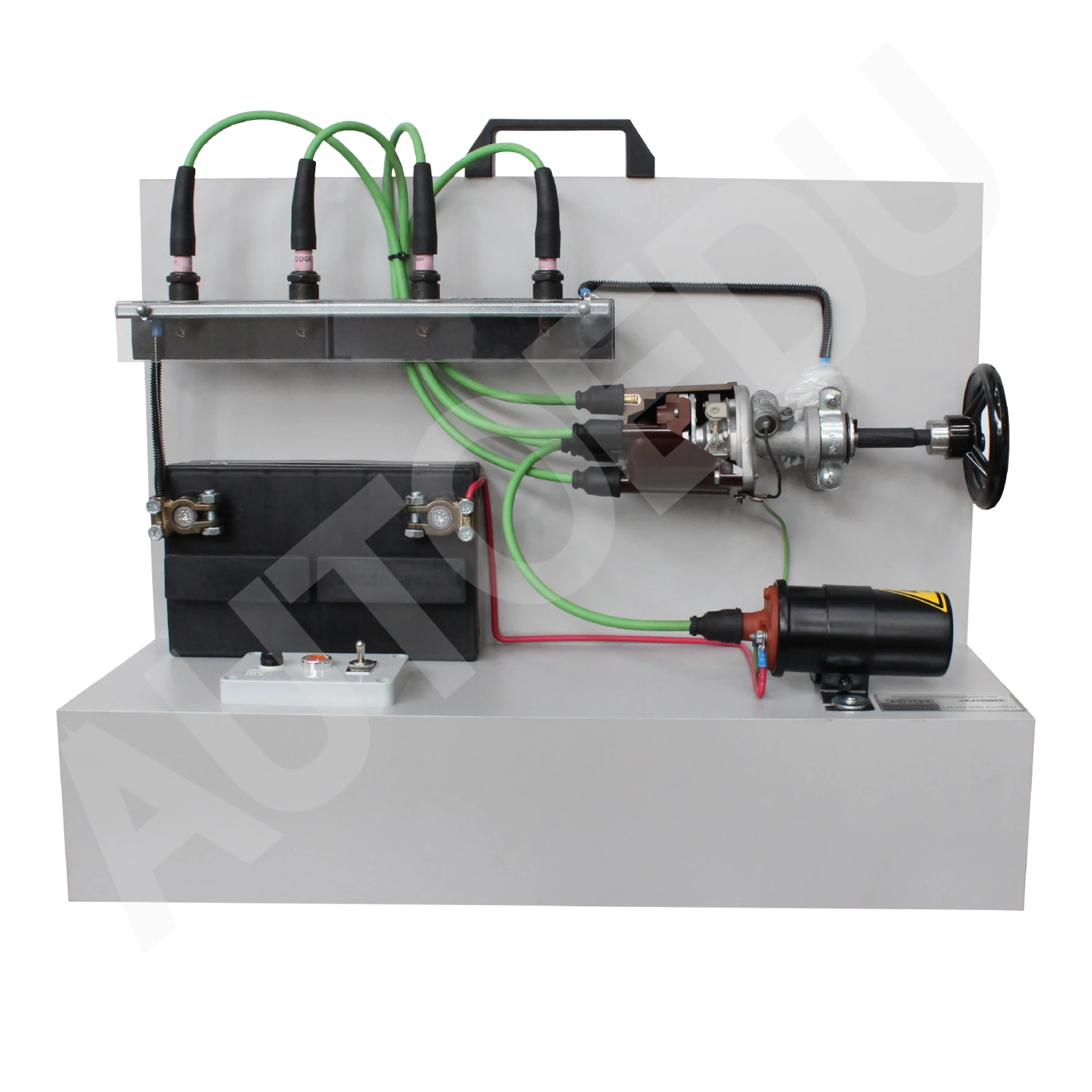
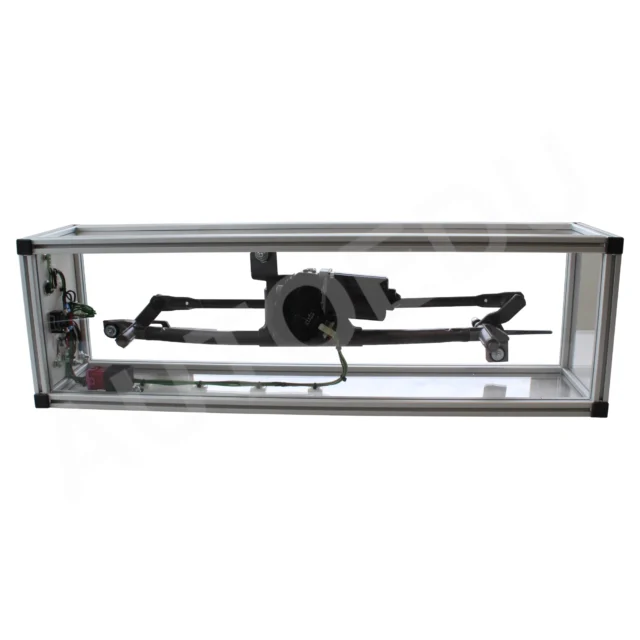
12V Starter Functional Model is a sophisticated educational tool mounted on an aluminum base, featuring authentic automotive components including a bendix drive and ignition switch. This model is equipped with dual operational modes—Mode A for normal starter function demonstration and Mode B for solenoid and coil performance testing. It includes detailed electrical diagrams for both modes and wire loops for current measurement (current clamp meter required separately). The unit’s design integrates a protective plexiglass cover, ensuring safety while providing clear visibility of internal components during operation and diagnostic tasks.
They enable safe, repeatable, and effective hands-on learning; improve diagnostic competency; and prepare students for the rapidly advancing field of automotive electronics.
Instructors can demonstrate circuit operation and troubleshooting methods while students perform guided exercises using voltage, resistance, and continuity tests.
Many units include built-in fault switches or software-based fault insertion so students can practice diagnosing and repairing simulated real-world problems.
Yes. Basic trainers teach fundamental circuit principles, while advanced systems integrate sensors, actuators, and ECU-controlled modules for higher-level diagnostics.
They learn circuit theory, fault finding, wiring techniques, signal testing, and safe use of diagnostic instruments like oscilloscopes and scan tools.
Yes. Trainers often include schematic diagrams and fault simulations, allowing students to trace circuits, identify connections, and solve electrical problems step by step.
Students can connect, measure, and test circuits using real components, wiring diagrams, and multimeters—gaining experience in safe and correct diagnostic procedures.
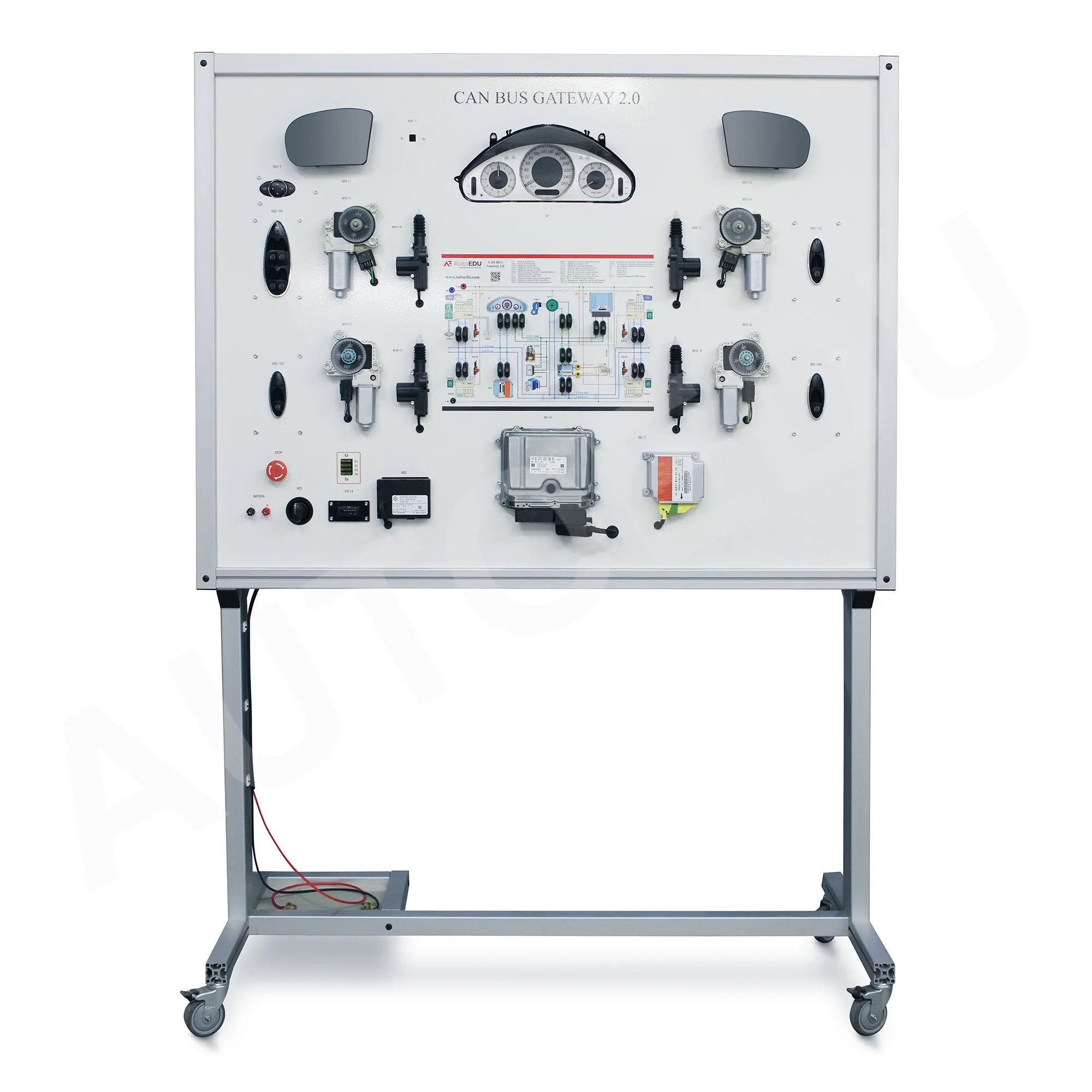
They typically include wiring systems, lighting, battery and charging systems, starting circuits, relays, fuses, CAN bus communication, and fault diagnosis.
Understanding vehicle electricity and electronics is essential for diagnosing faults, performing repairs, and working with modern vehicles that rely heavily on electronic control units (ECUs) and sensors.
These trainers are educational tools that help students learn how vehicle electrical circuits, wiring, and electronic control systems function in modern cars.