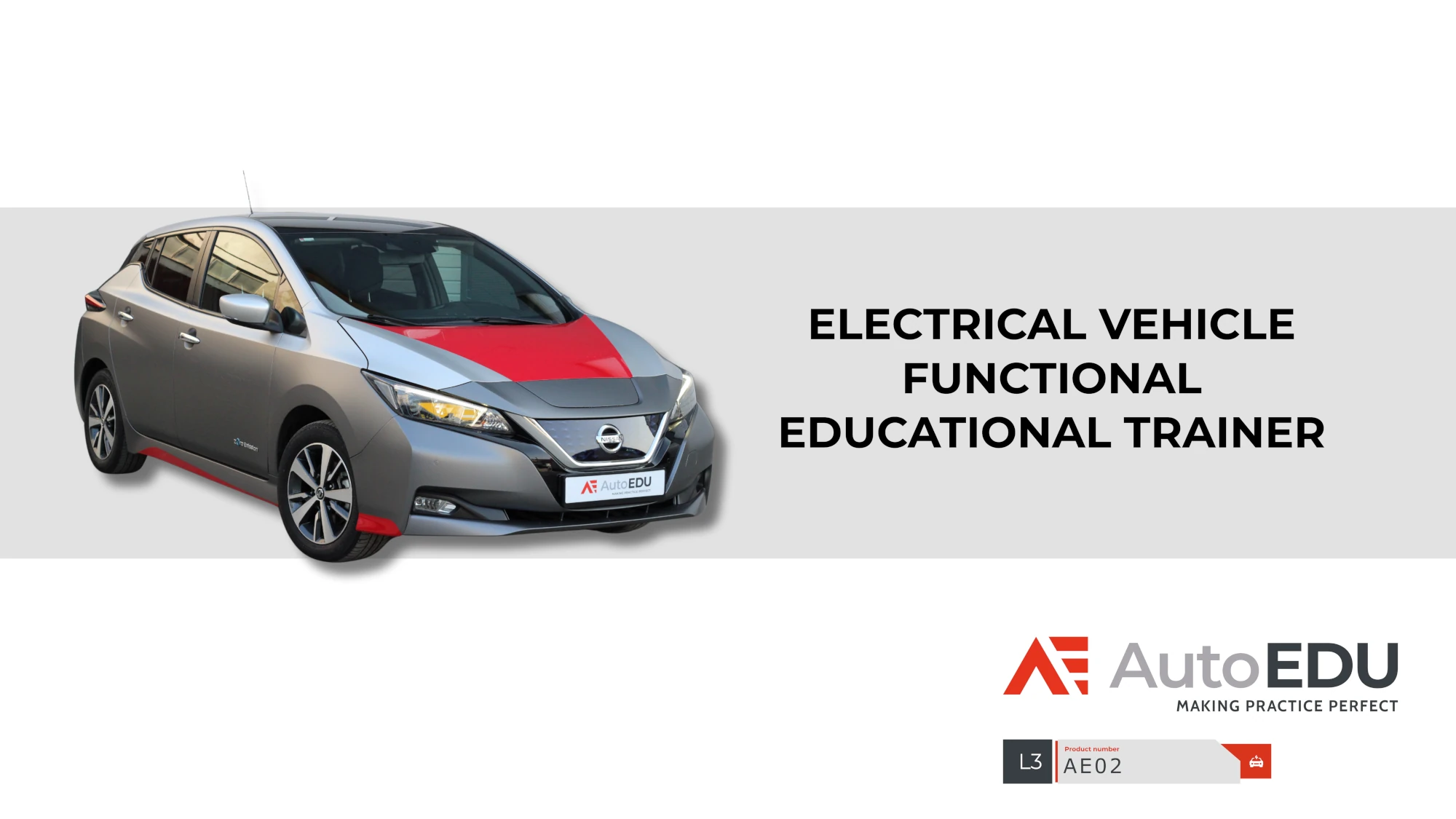
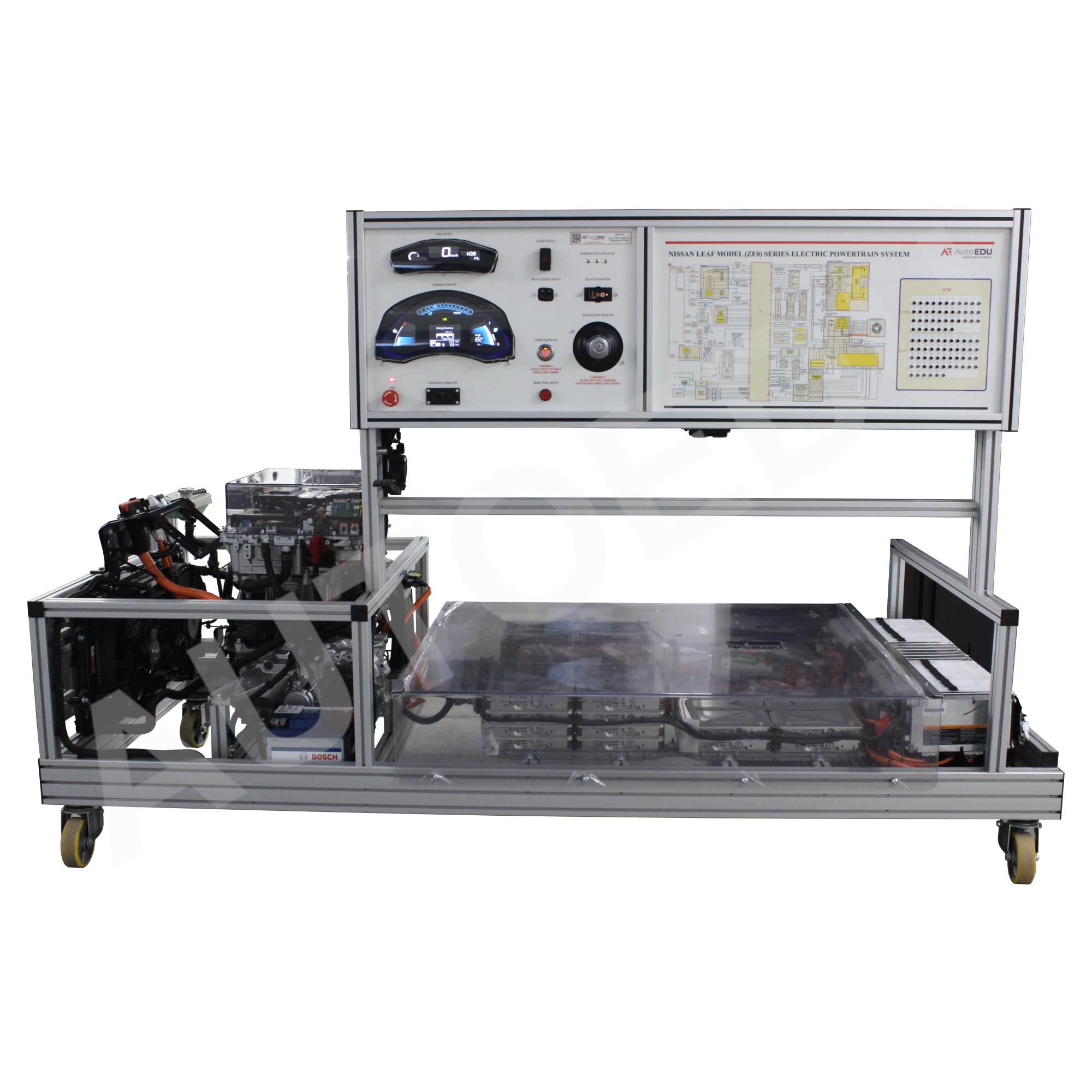
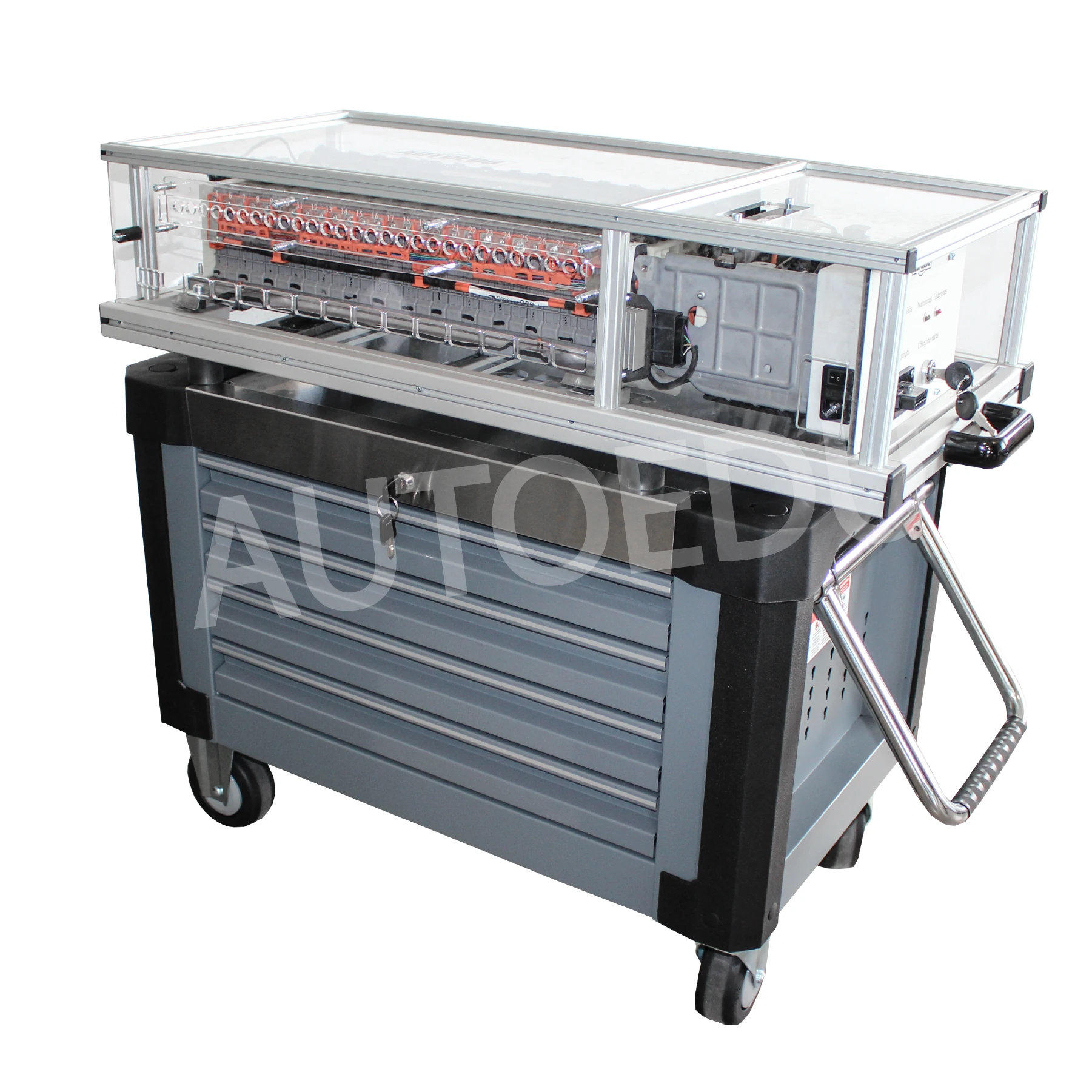
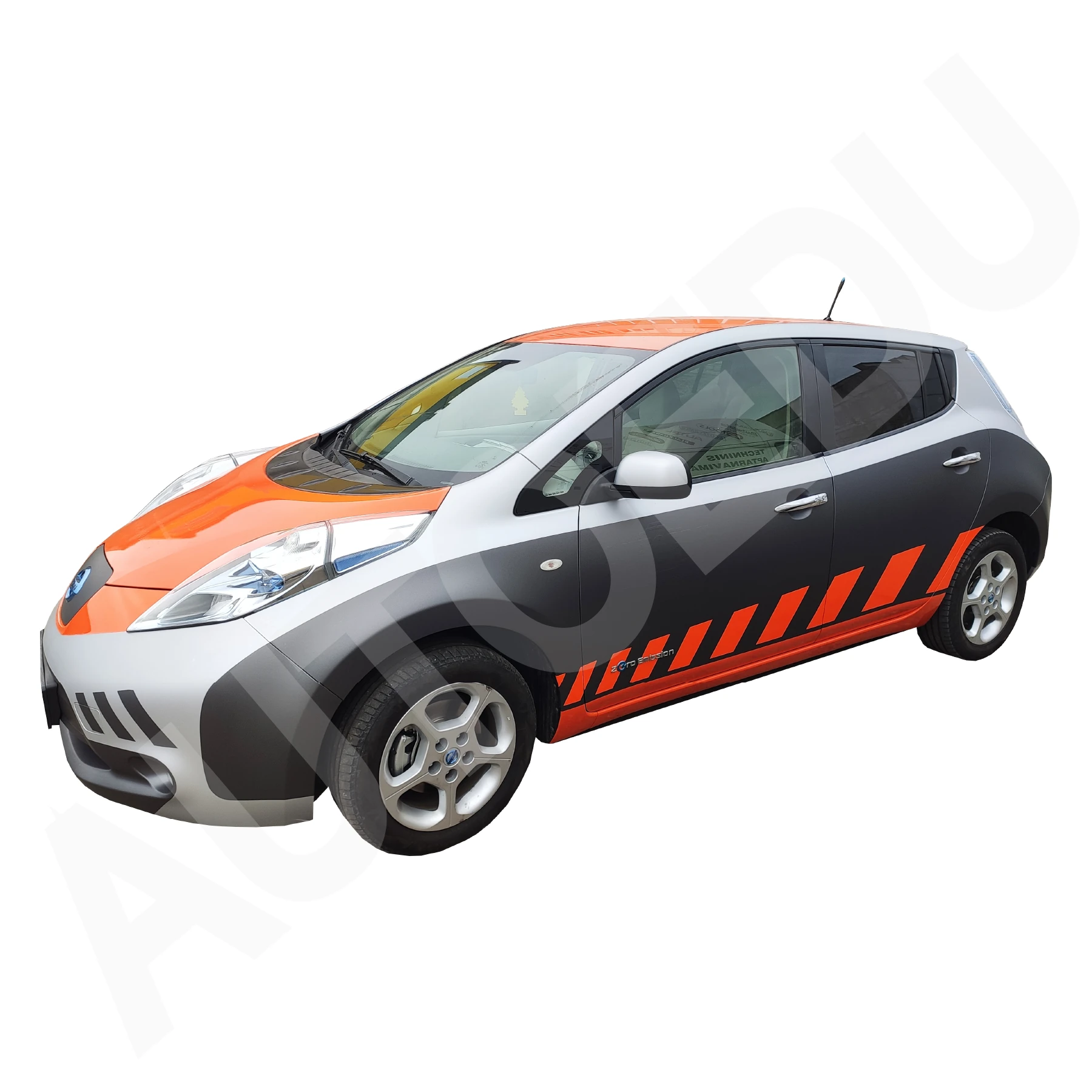
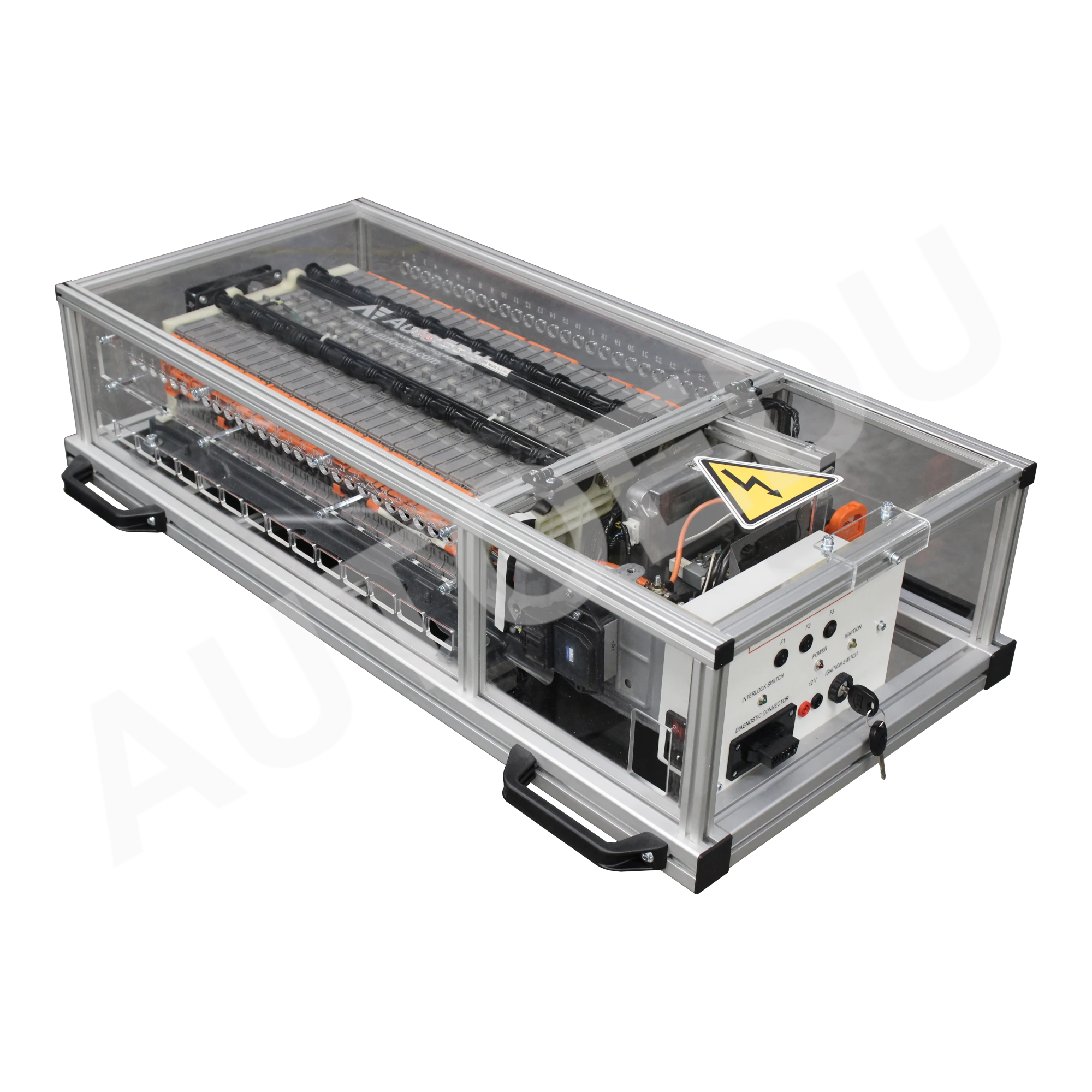
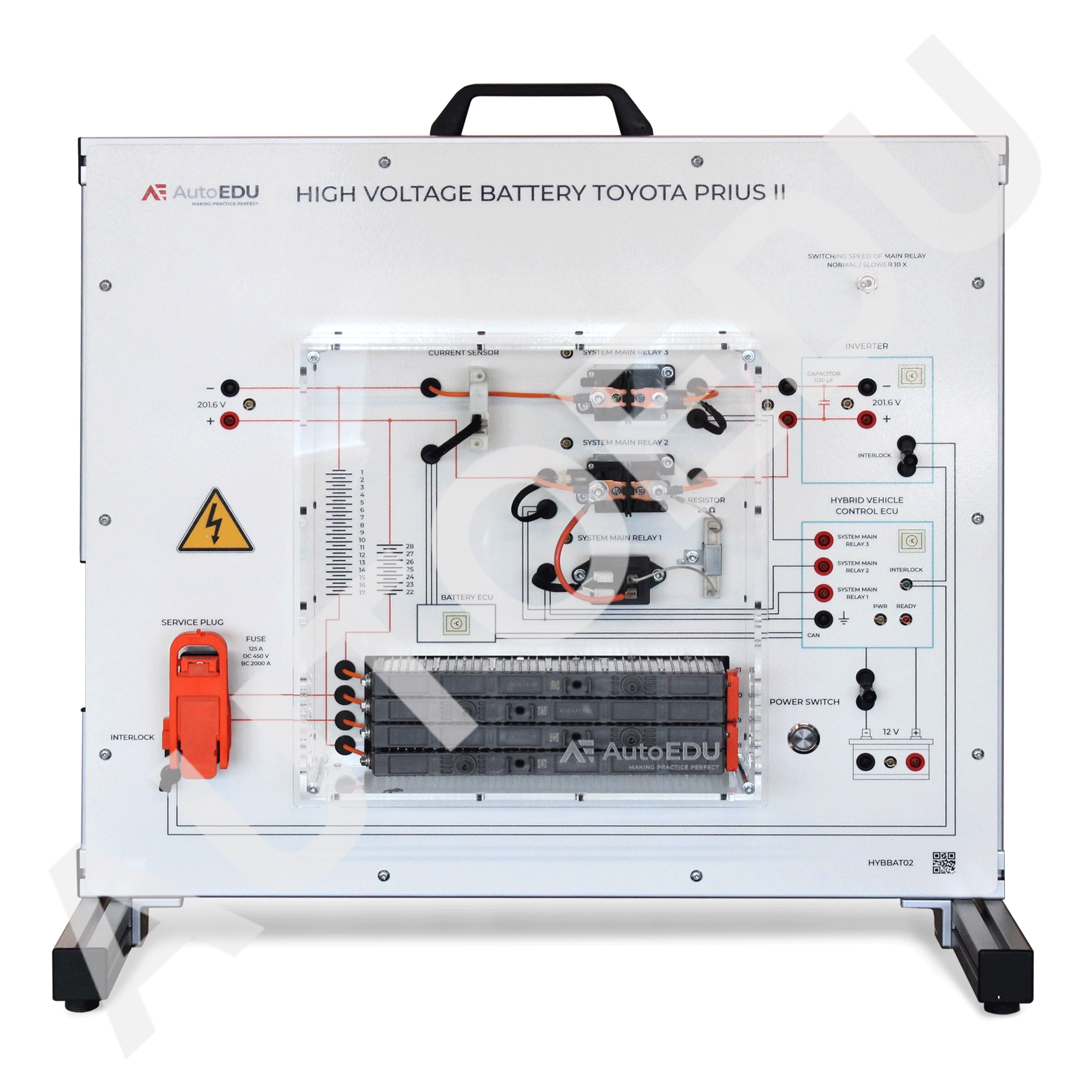
Fully operational electric vehicle based on the Nissan Leaf II shows real vehicle components and diagnostic capabilities for systems such as the electric motor, high-voltage battery, ABS, AC, airbags, brakes, suspension and more, providing knowledge of modern electric vehicle systems.
This product includes two measuring and fault simulation systems by default (except high-voltage system), selected from the available options below. Additional systems can be ordered separately if required.
Available systems:
AE-AC-BOX- Built in measuring box with open contacts and wiring diagram for climate control
AE-BR-BOX- Built in measuring box with open contacts and wiring diagram for EV car braking system
AE-EV-BOX- Built in measuring box with open contacts and wiring diagram for EV system (no high voltage side)
AE-SRS-BOX- Built in measuring box with open contacts and wiring diagram for SRS AIRBAG
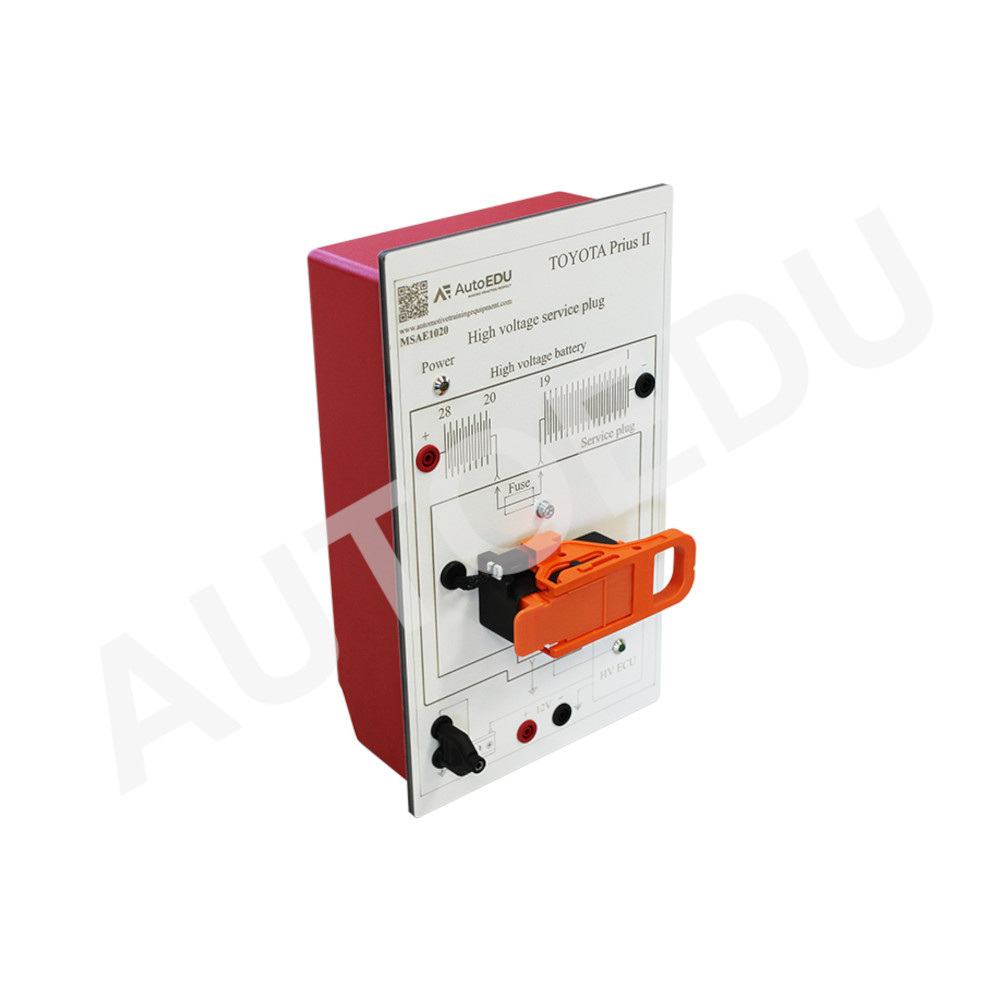
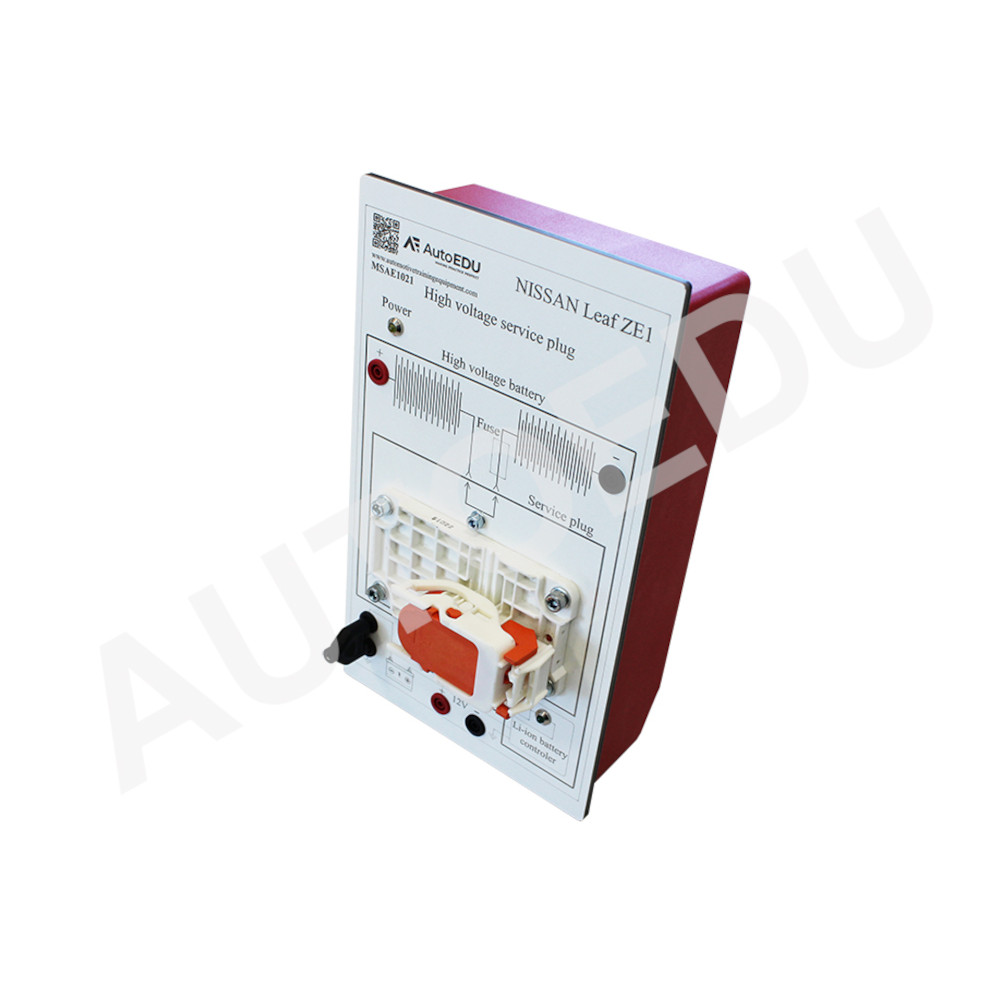
AE-HV-BOX- Built in measuring box with open contacts and wiring diagram for EV system (high voltage side)(not included in default)
Yes. The system is compatible with most EV training programs covering electrical fundamentals, high-voltage systems, diagnostics, and safety certification coursework.
The trainer provides a physical representation of EV components. Students can follow circuit diagrams, verify design principles, observe signal behavior, and relate theoretical knowledge directly to hardware.
Typical systems include:
- High-voltage battery and BMS.
- On-board charger and charging interface.
- DC-DC converter.
- Auxiliary 12 V system.
- CAN communication network.
- Thermal management fundamentals.
Students commonly use:
- High-voltage multimeters.
- Insulation resistance testers.
- Oscilloscopes for signal analysis.
- Diagnostic scanners with OBD or CAN communication.
Most EV training platforms allow instructors to introduce electrical, sensor, and communication faults. This helps students practice real diagnostic procedures, including voltage checks, continuity tests, and ECU fault code analysis.
Typical demonstrations include:
- High-voltage battery architecture.
- Isolation monitoring principles.
- DC-DC conversion and auxiliary power circuits.
- Inverter operation and three-phase motor control basics.
- High-voltage interlock loop (HVIL) functions.
Electric vehicles use high-voltage systems, power electronics, and advanced control modules. These systems require skills that differ from traditional internal combustion engines. Training platforms help students gain practical experience without the risks associated with live vehicles.
Students learn to:
- Identify high-voltage and low-voltage components.
- Perform measurements on DC-DC converters, inverters, and auxiliary circuits.
- Diagnose faults in power distribution and communication systems.
- Understand safety procedures for high-voltage vehicles.
- Trace wiring diagrams and validate signal flow.
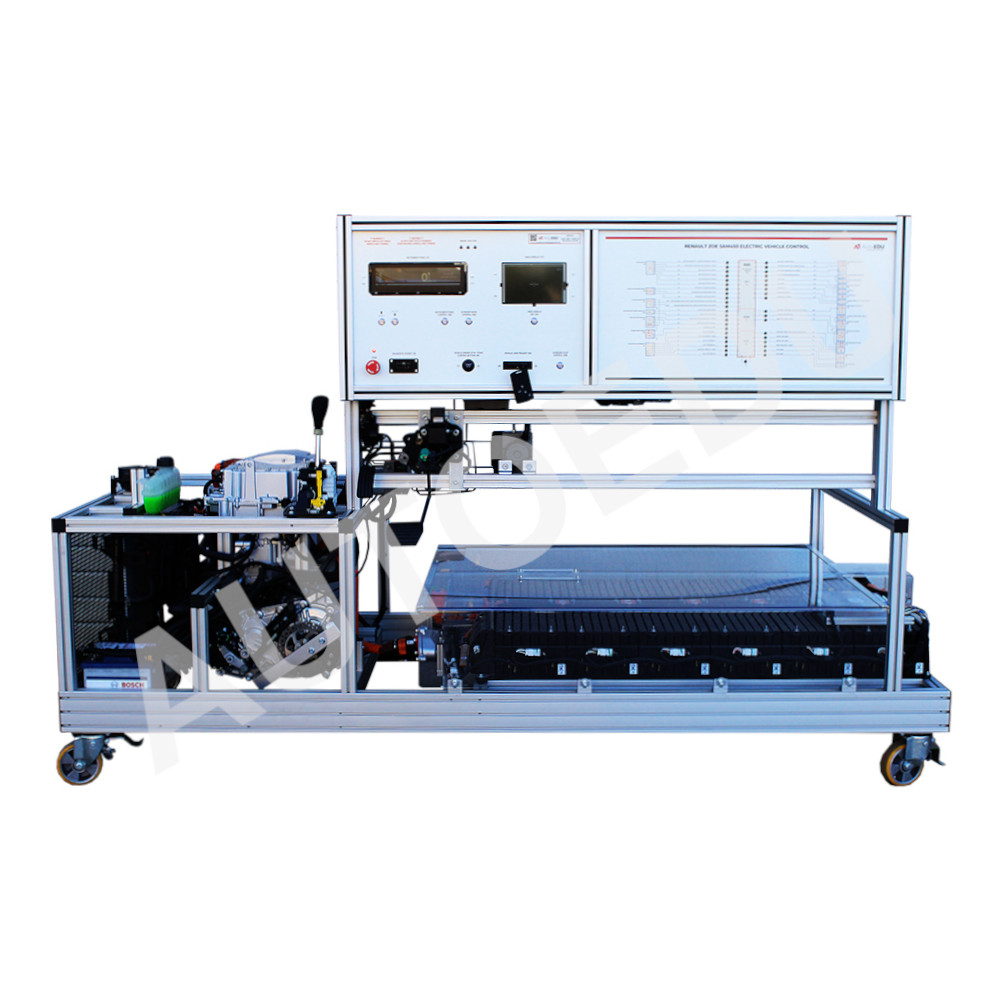
It is a training platform that simulates the main electrical, electronic, and power distribution systems used in modern electric vehicles. It allows students to perform diagnostics, measurements, component identification, and operational testing in a controlled environment.