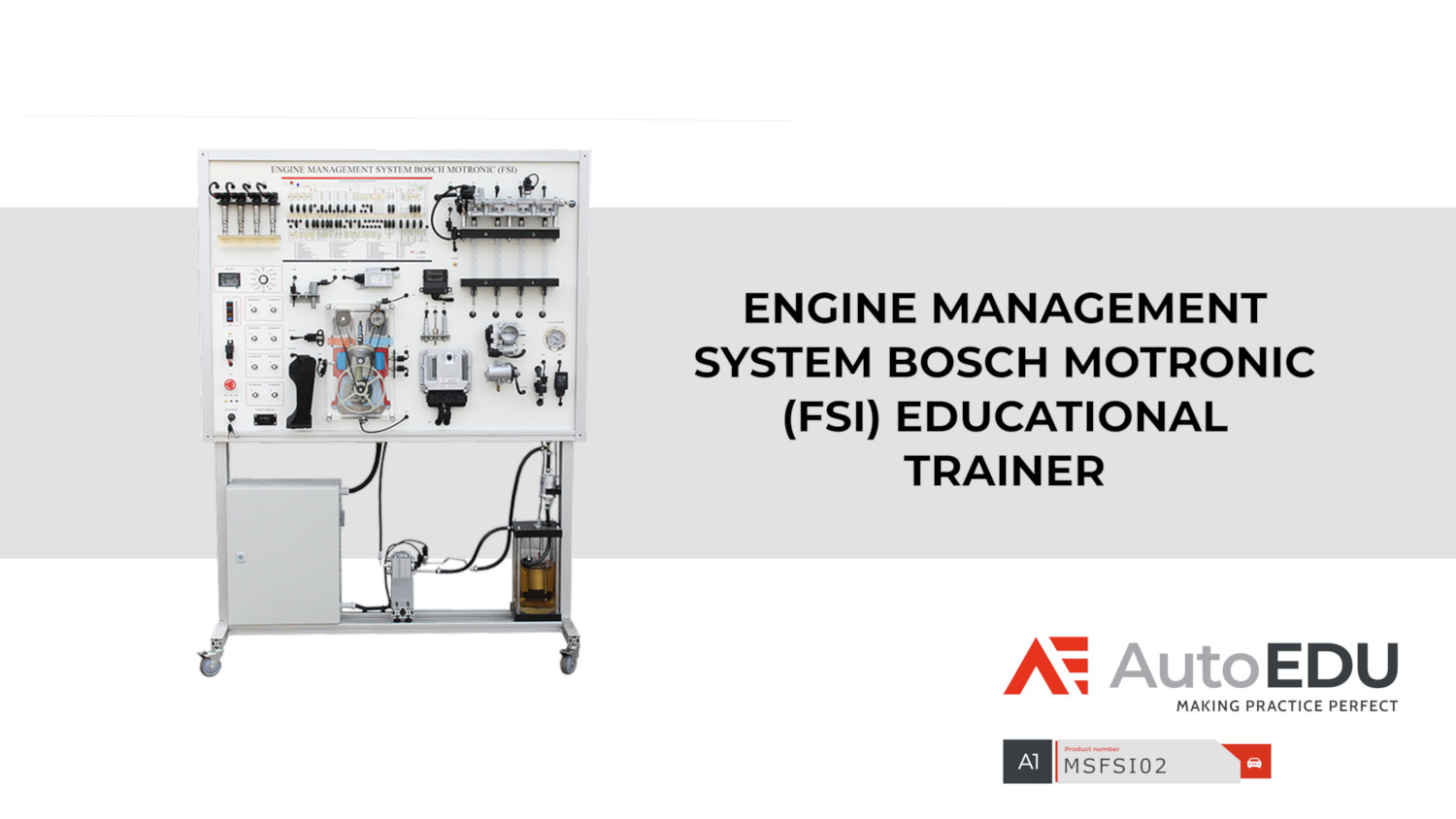
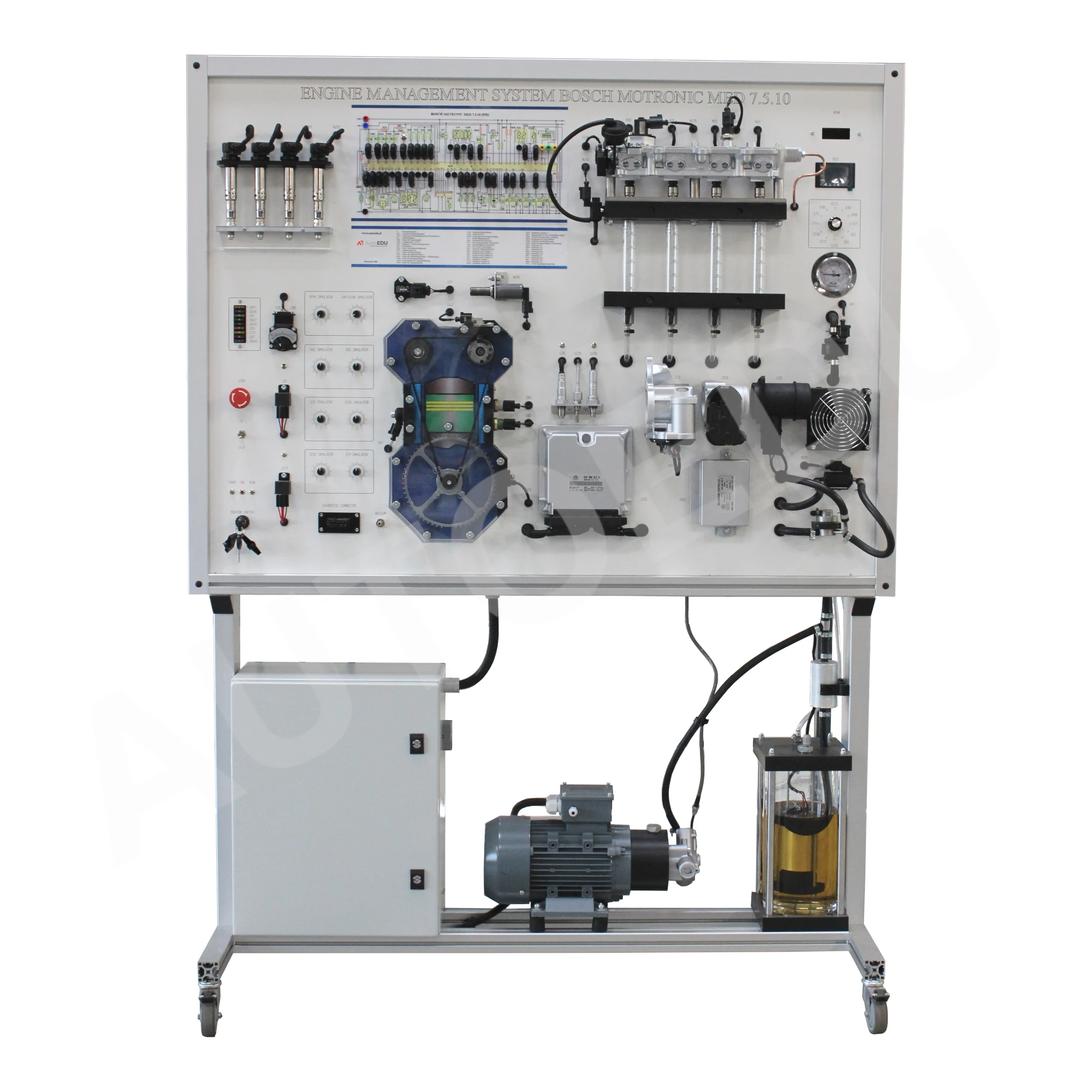
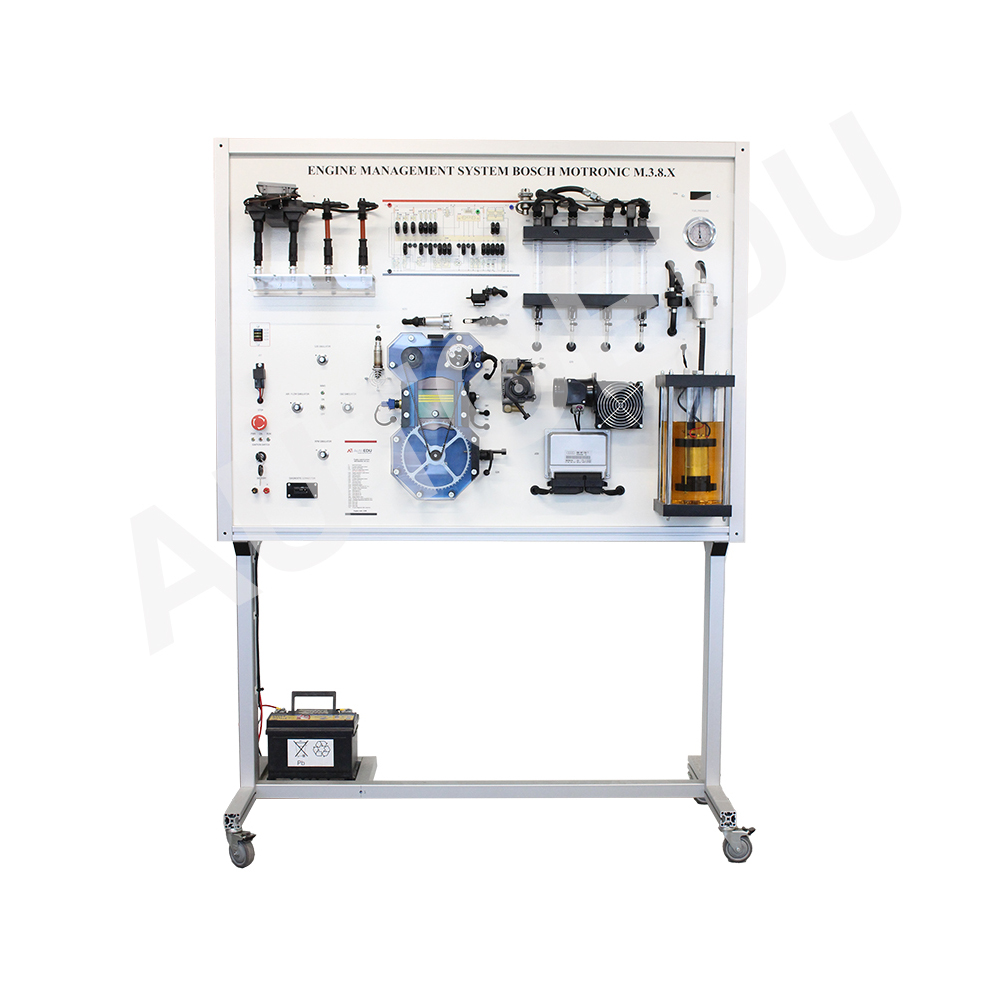
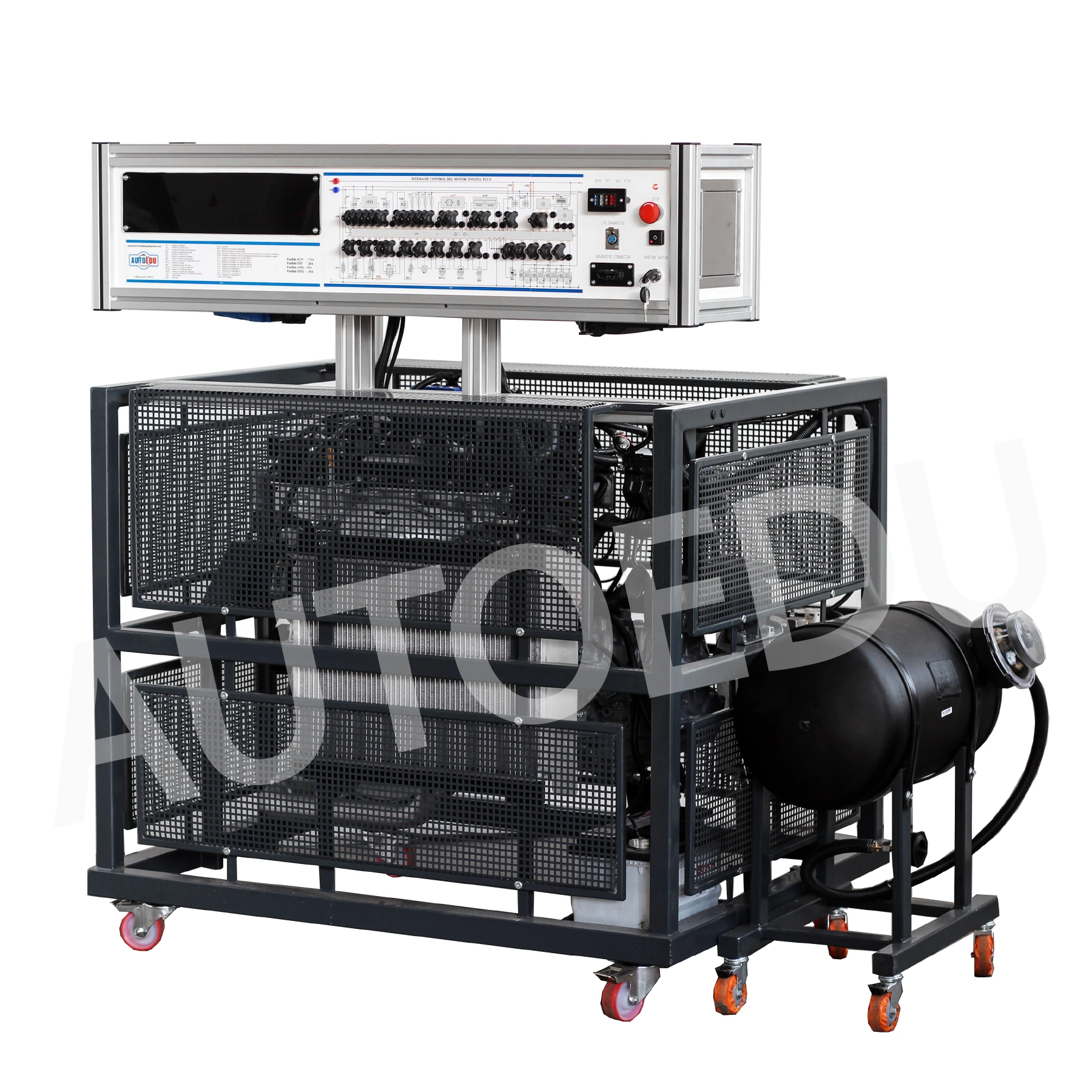
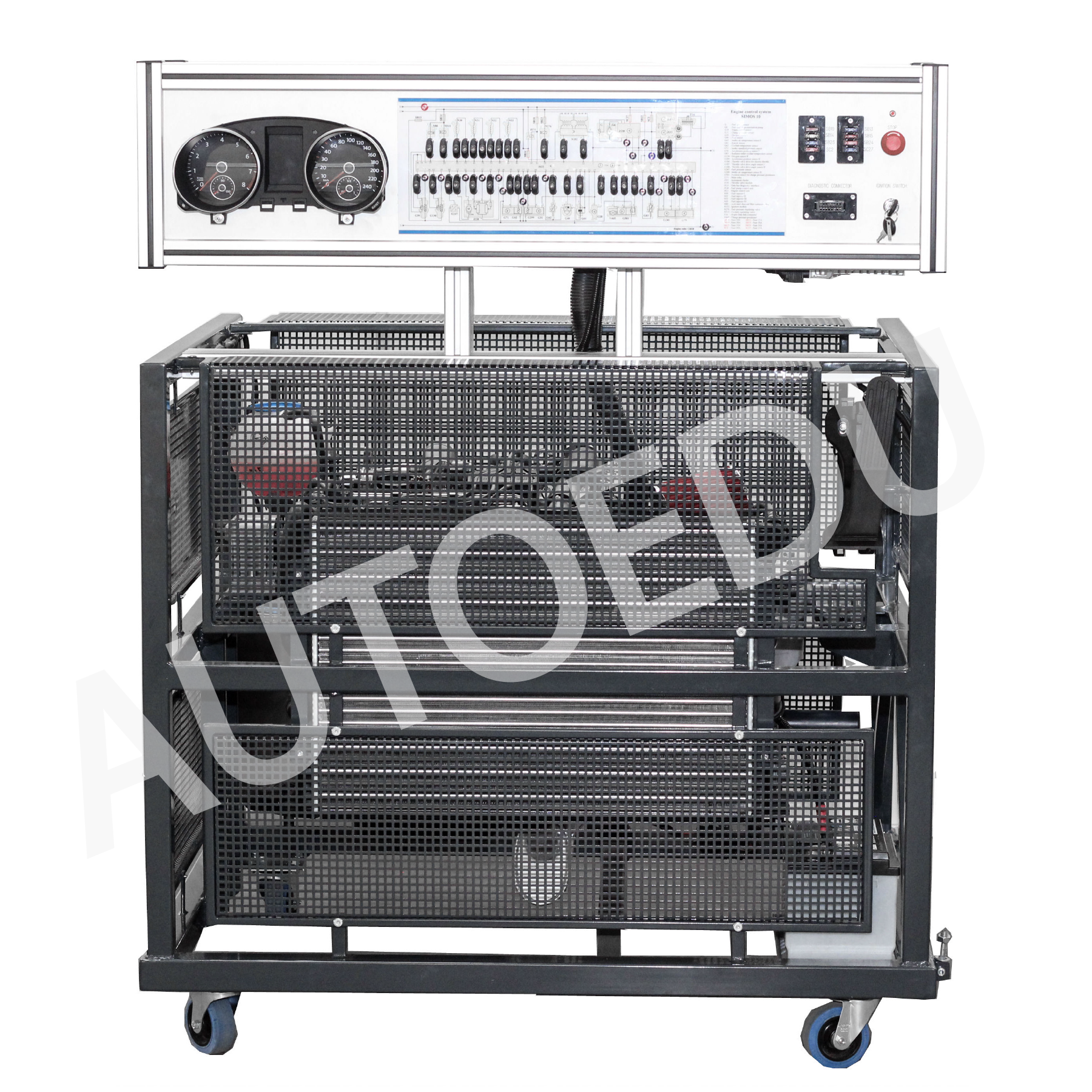
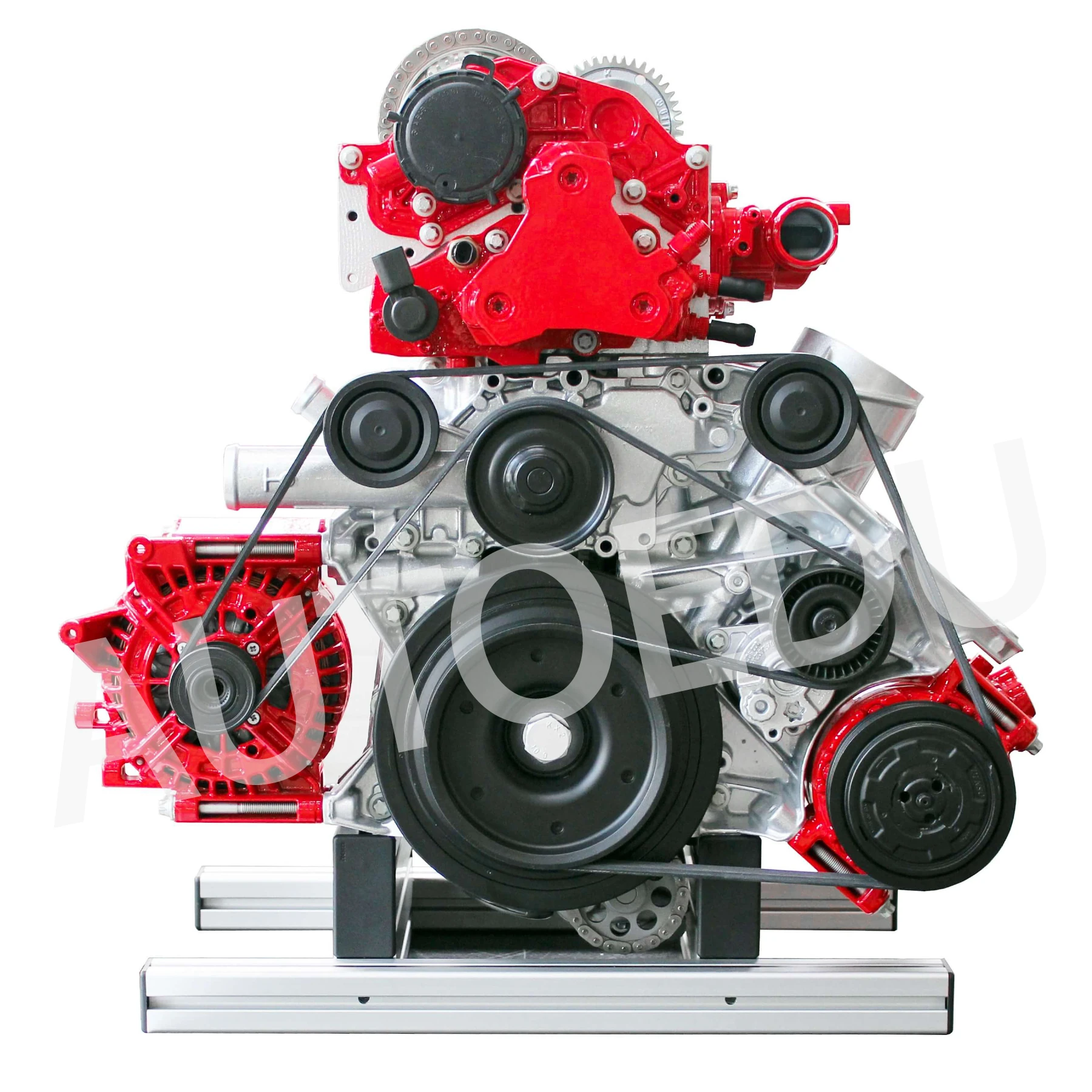
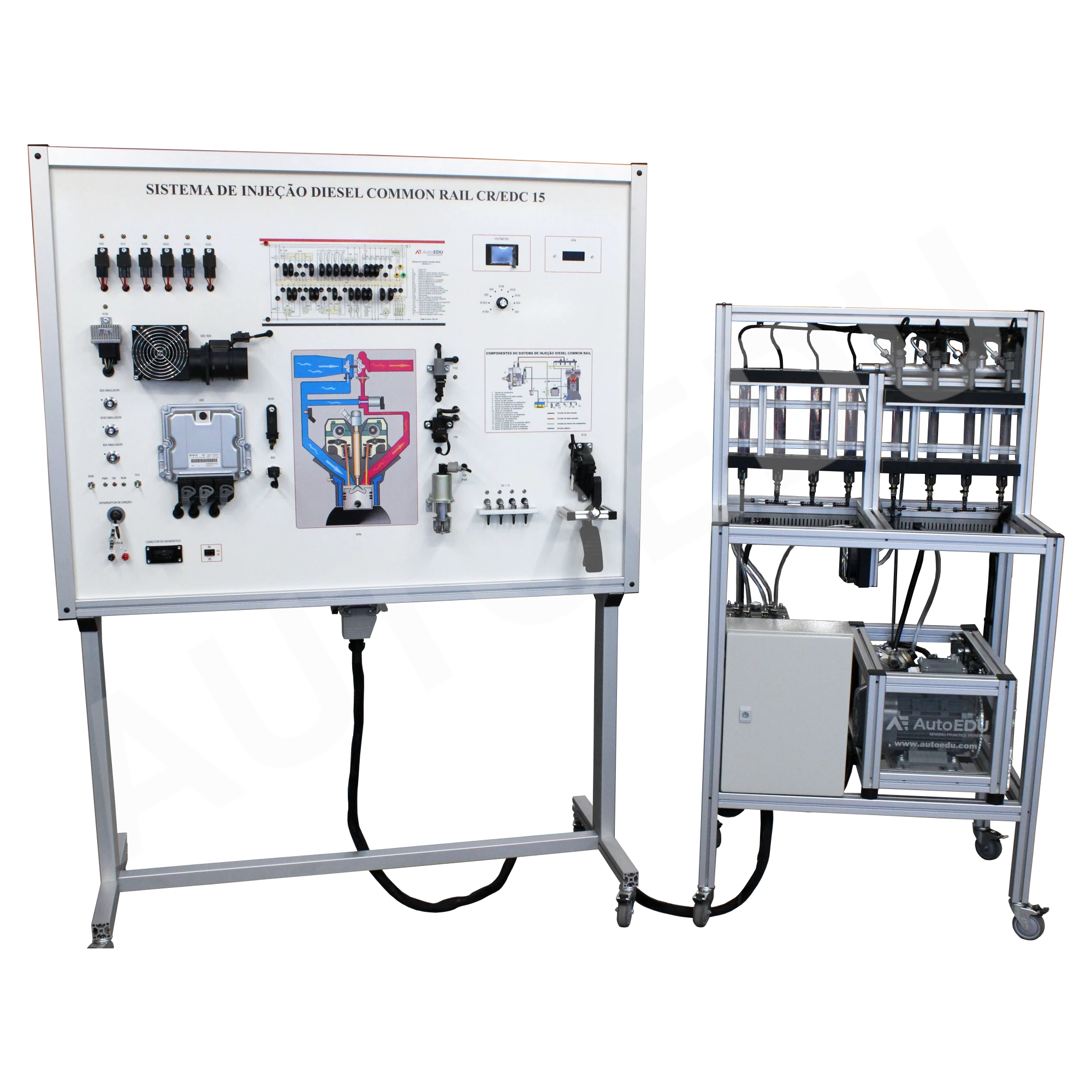
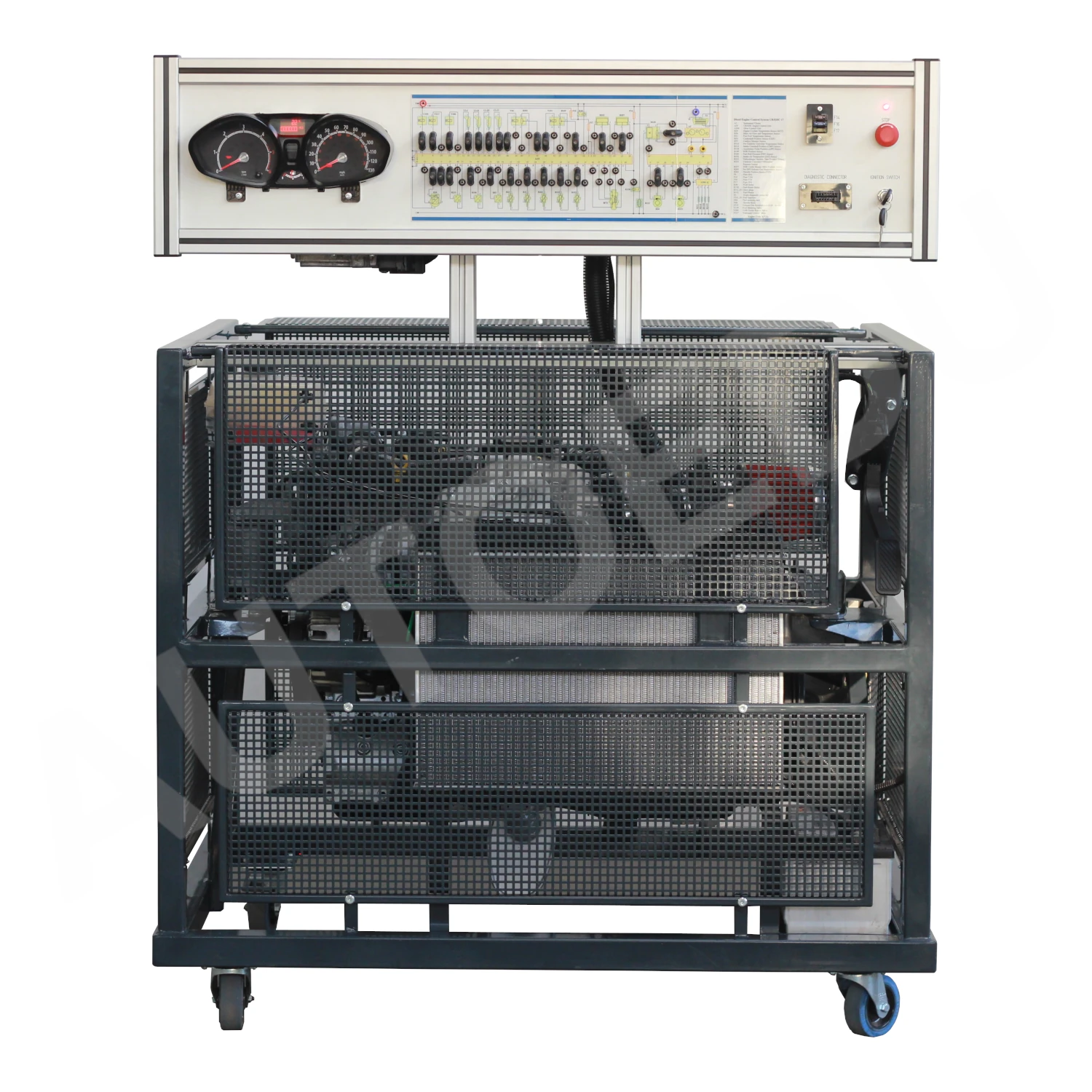
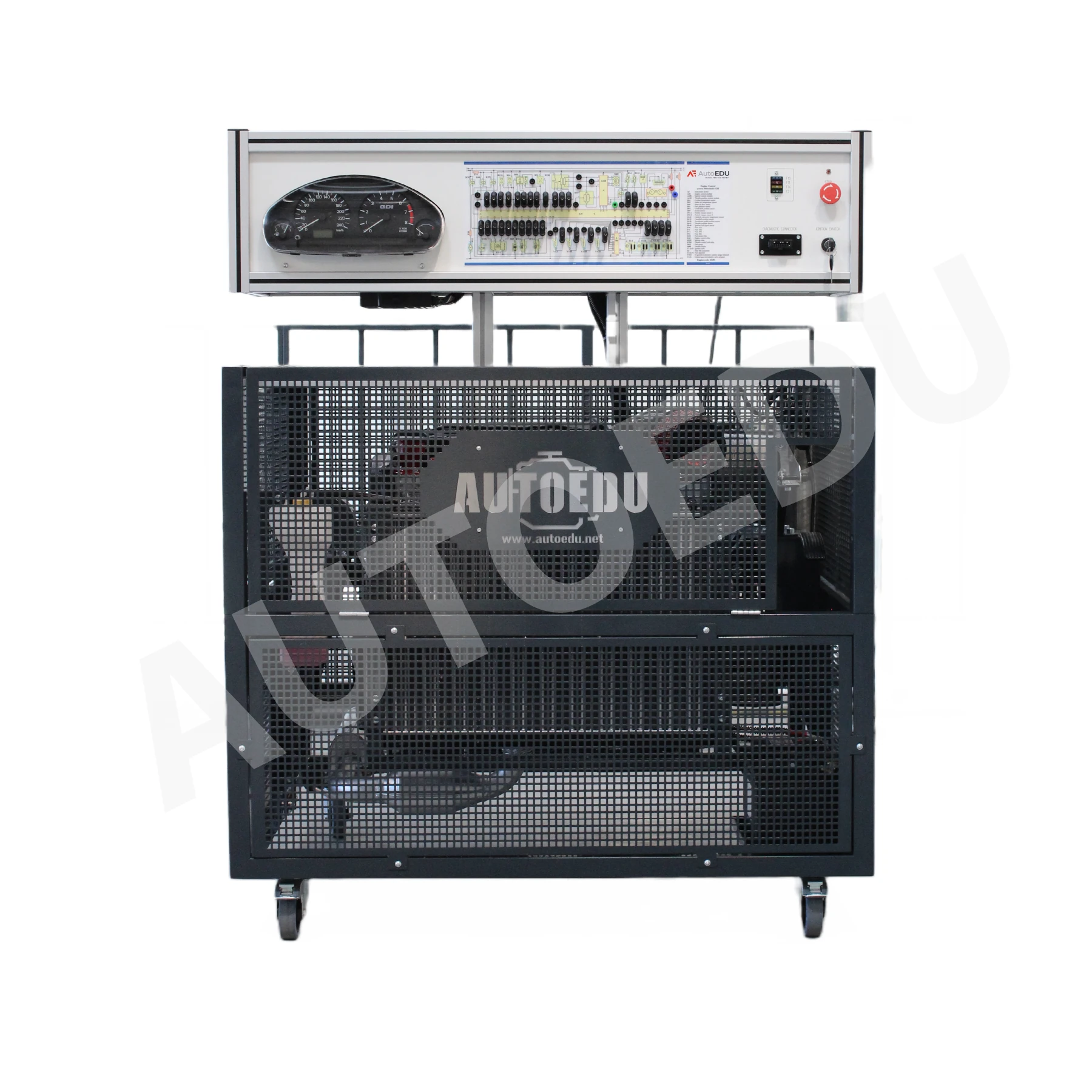
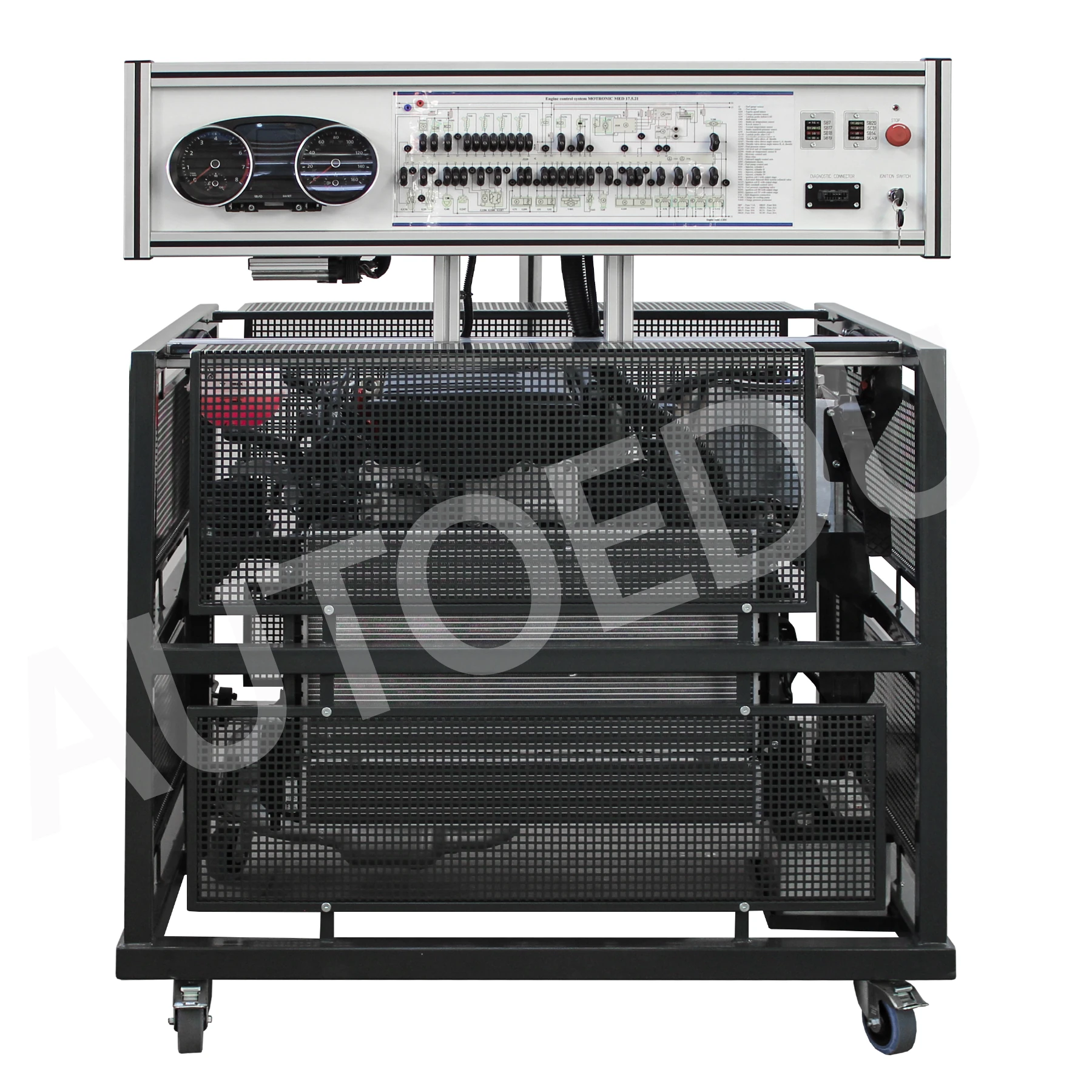
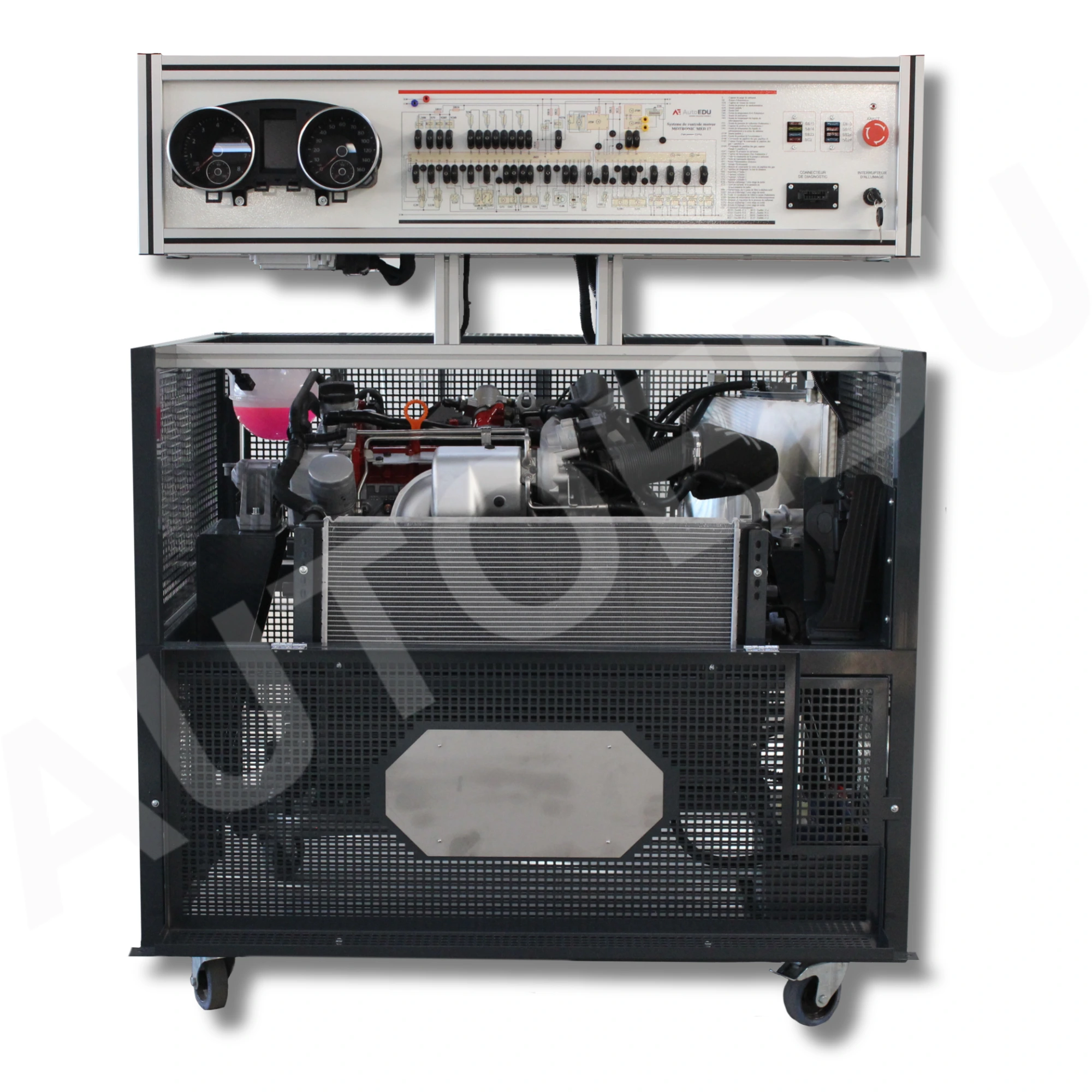
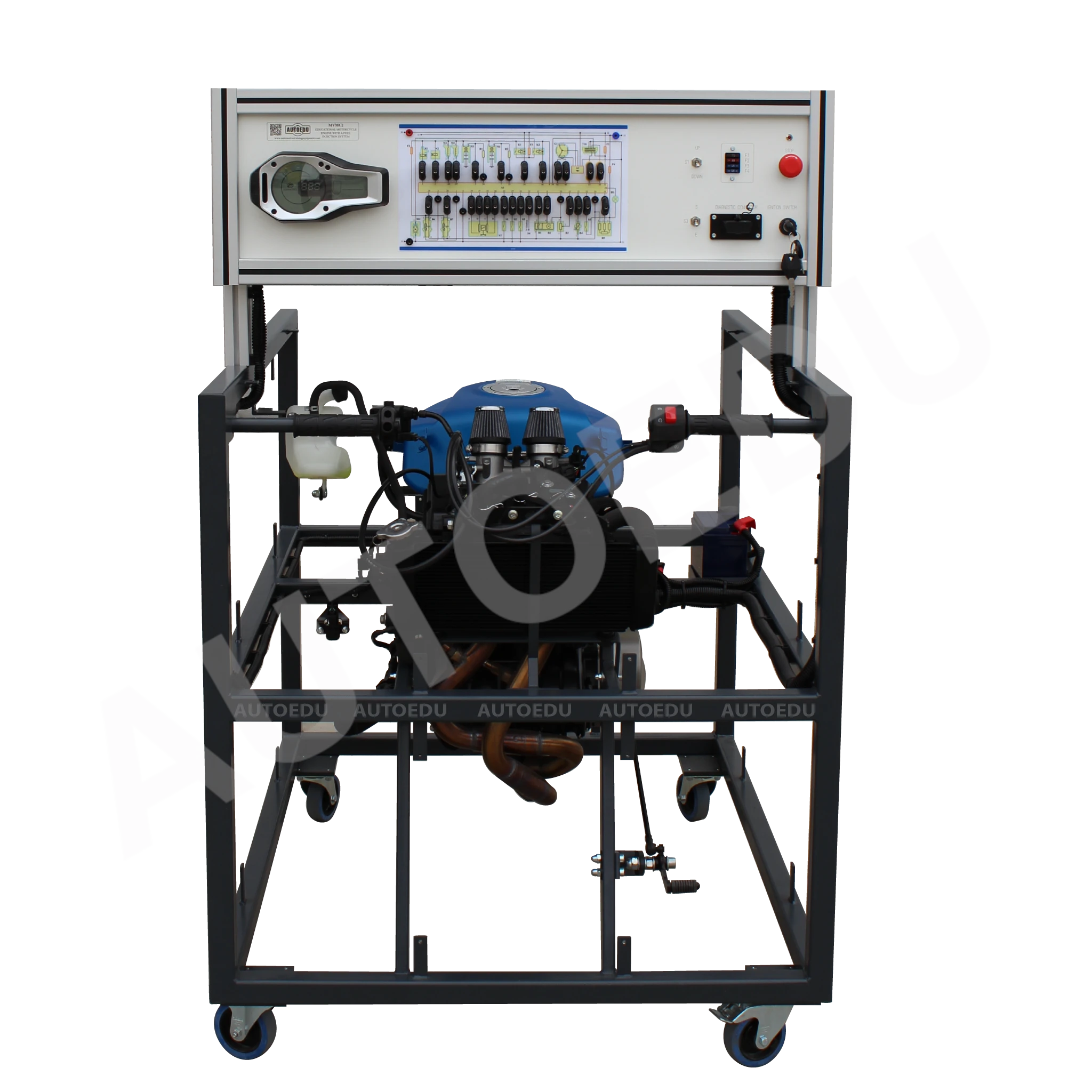
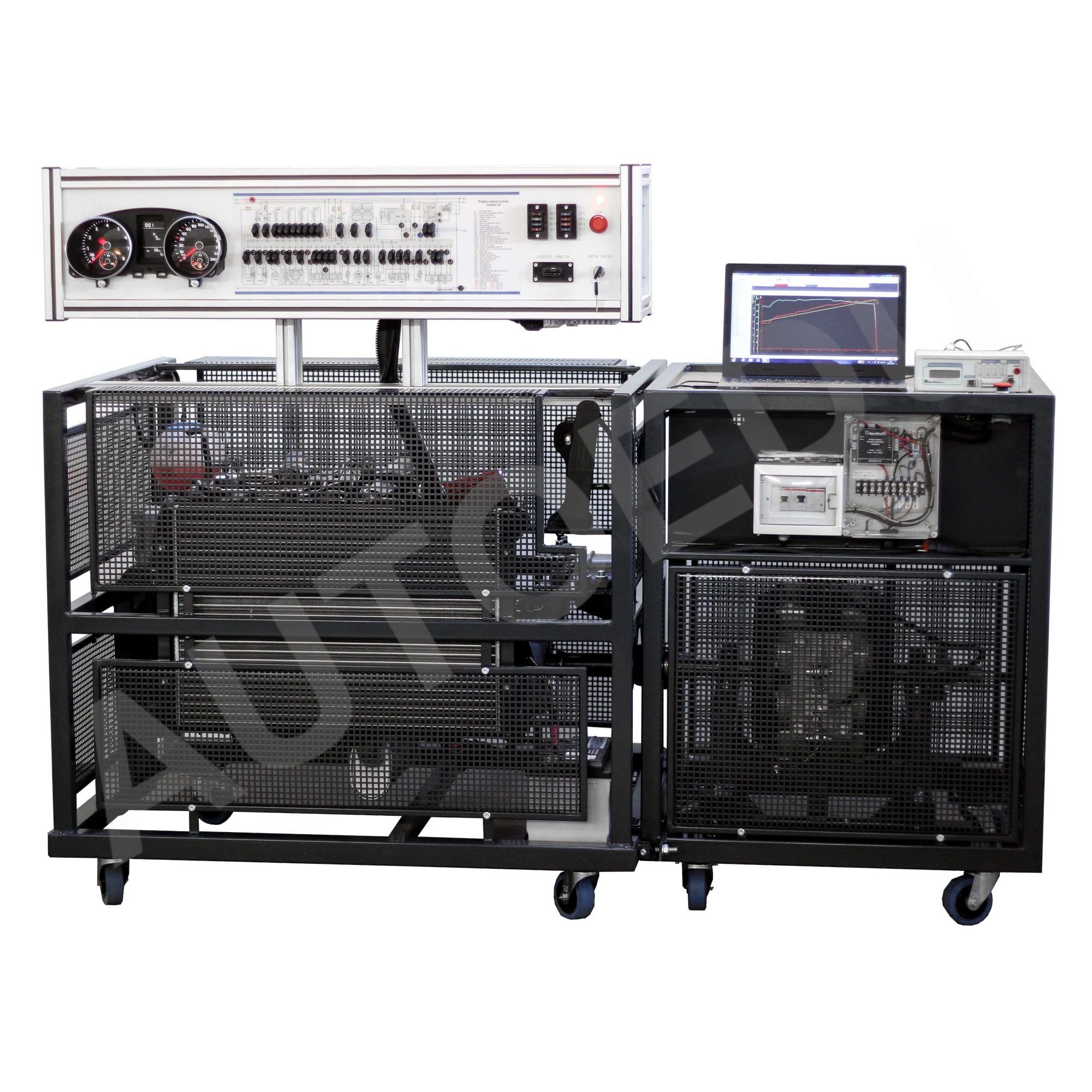
Training stand of Engine Management System Bosch Motronic (FSI) MSFSI02 offers a hands-on learning experience about modern car, demonstrating the workings of a direct petrol(gasoline) injection system. This specialized device includes all the engine management components as in the real car, such as fuel supply, exhaust and ignition systems, helping users understand how these parts interact.
The trainer supports over 30 practical tasks for technical training.
Example tasks with available video instructions:
The MSFSI02 supports over 30 training tasks, including injection quantity measurement, live signal monitoring, parameter adjustments, and fault diagnostics. This ensures comprehensive coverage of modern engine management systems.
Unlike a vehicle, the trainer is designed for repeated practice, easy visibility of circuits, fault simulation, and safe classroom operation. It provides access to components and data that are normally hidden inside a car.
The stand provides visible wiring, test points, and banana plug connectors. Students can use multimeters, oscilloscopes, or scan tools to measure real-time voltages, currents, and sensor outputs directly from the system.
Absolutely. The system includes a standard OBD-II 16-pin connector, supporting ECU communication, fault code management, live data monitoring, actuator activation, and throttle calibration. It works with multibrand and OEM scan tools.
Yes. Instructors can disconnect jumpers or adjust parameters to create more than 20 circuit faults. This allows students to practice structured troubleshooting and fault-finding, preparing them for real workshop scenarios.
Modern vehicles rely heavily on electronic engine management. The MSFSI02 provides real-world diagnostics and repair training without the risks or costs of live cars. It helps students build confidence in handling modern fuel, ignition, and ECU systems.
Students gain skills in:
• Fuel injection quantity and spray pattern measurement.
• High- and low-pressure fuel system operation.
• Ignition system diagnostics.
• Crankshaft and camshaft synchronization.
• Live signal measurement and sensor data interpretation.
• OBD-II diagnostic procedures, including fault code reading and actuator testing.