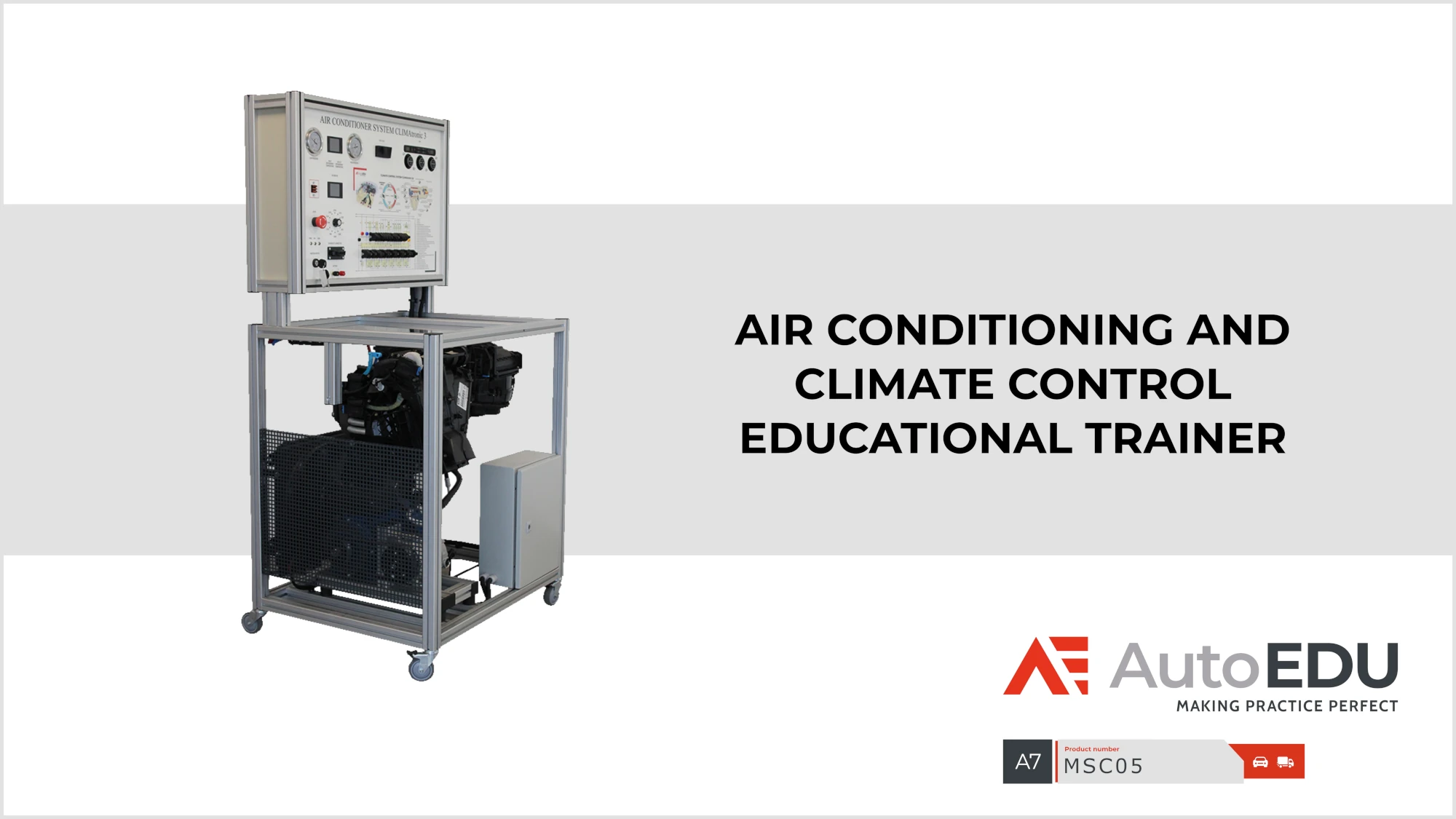
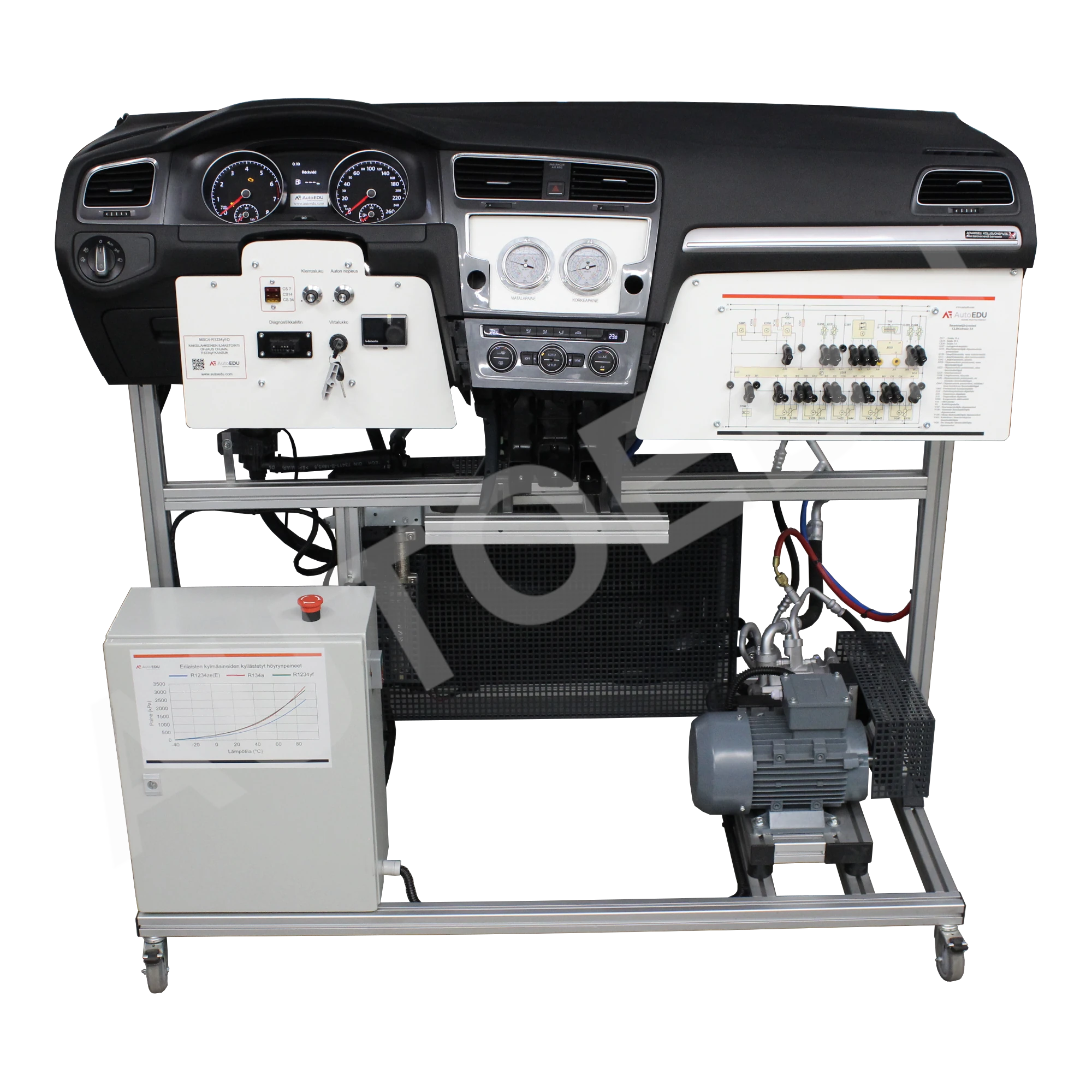
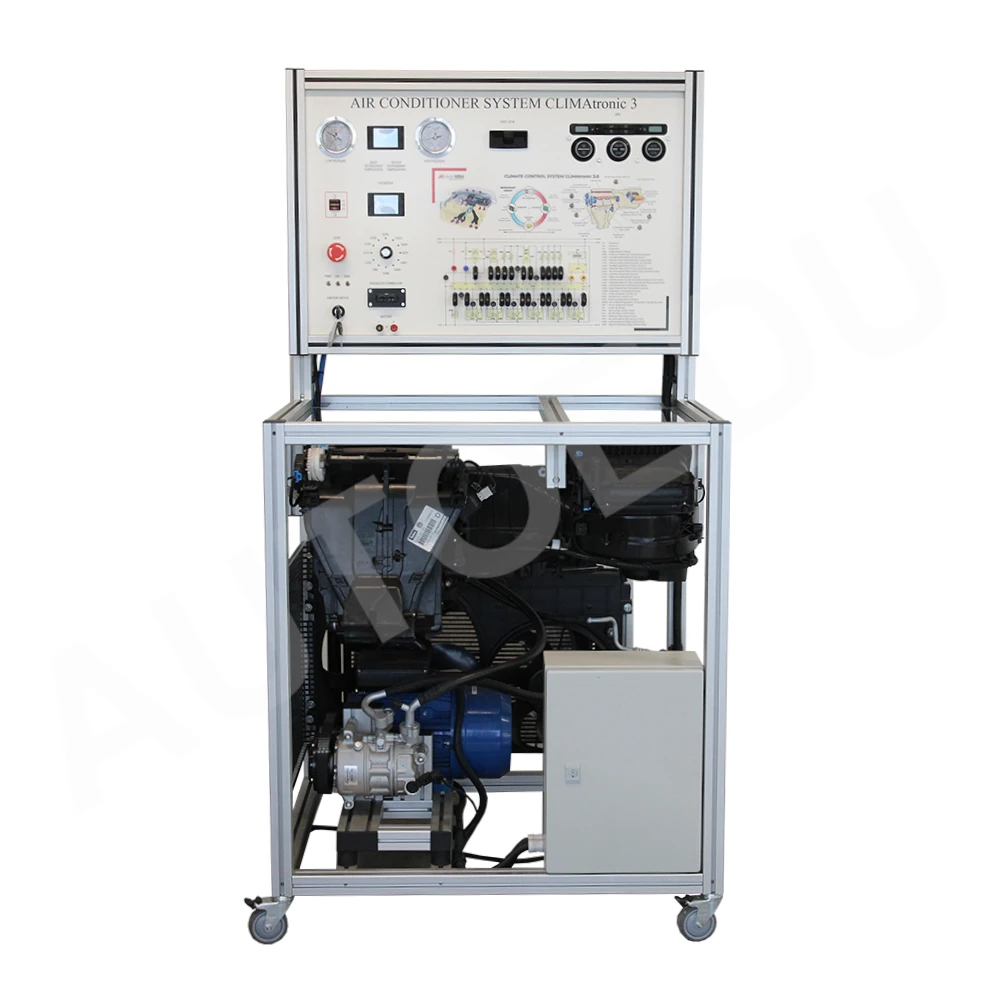
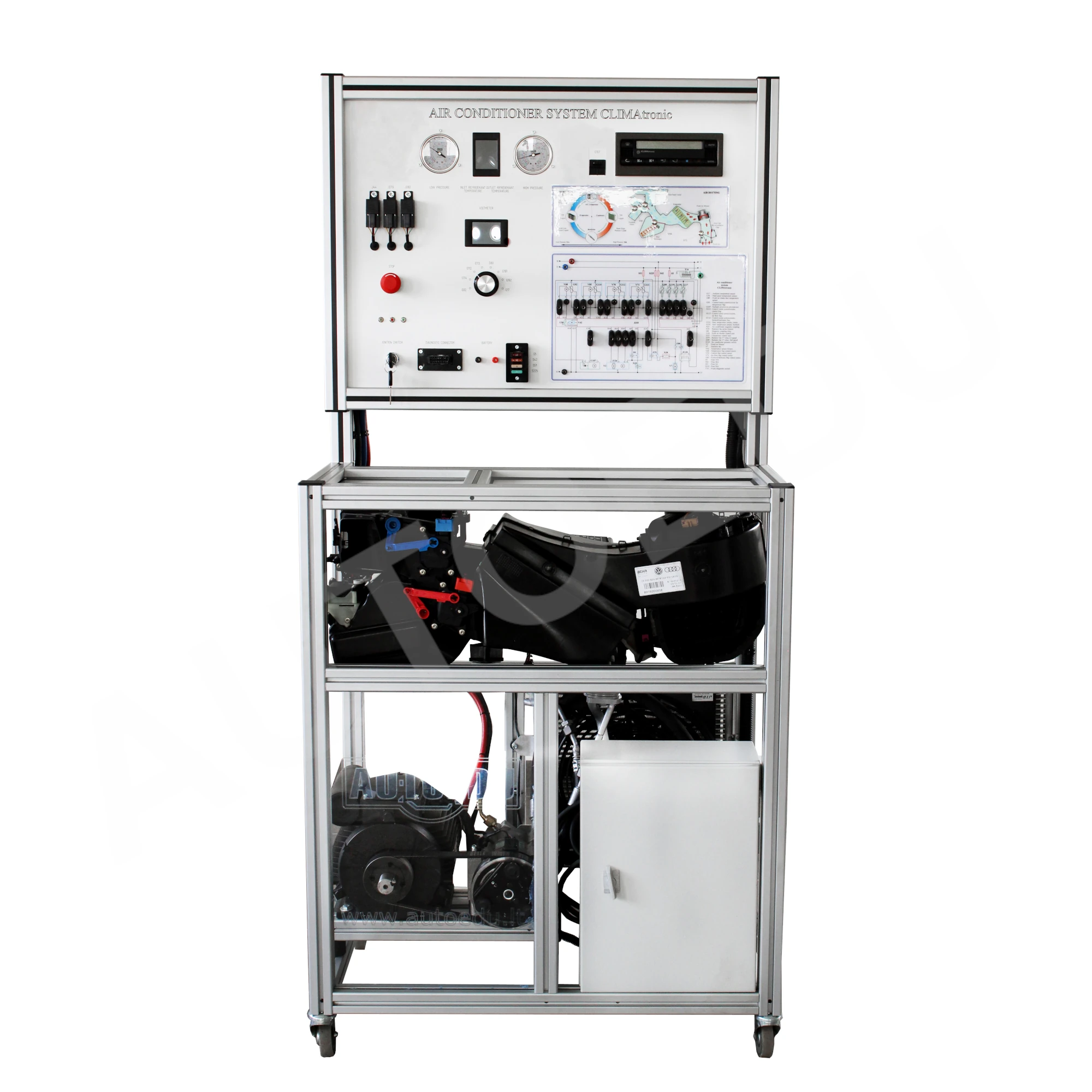
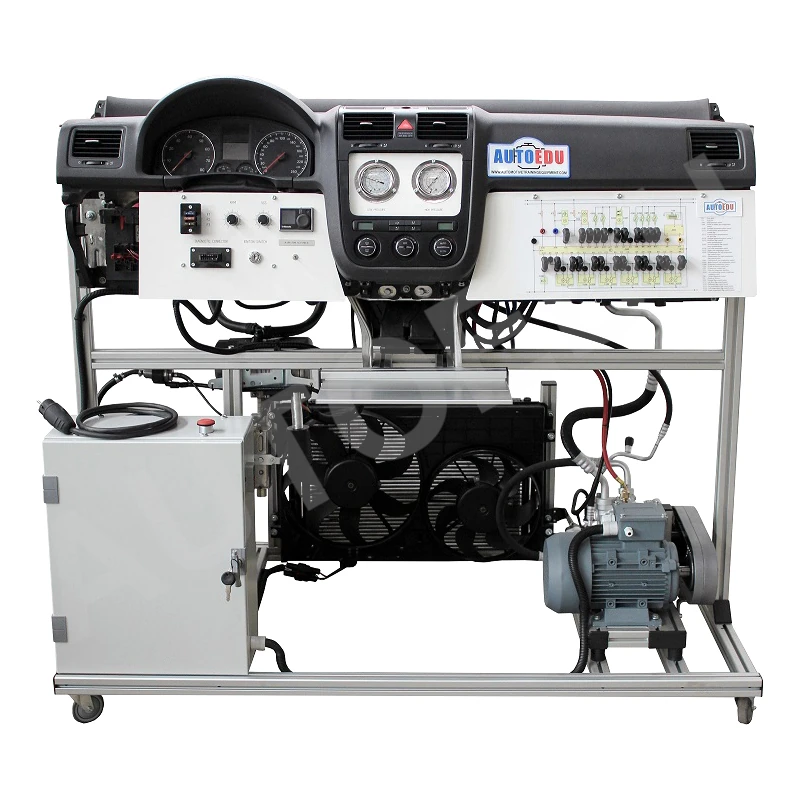
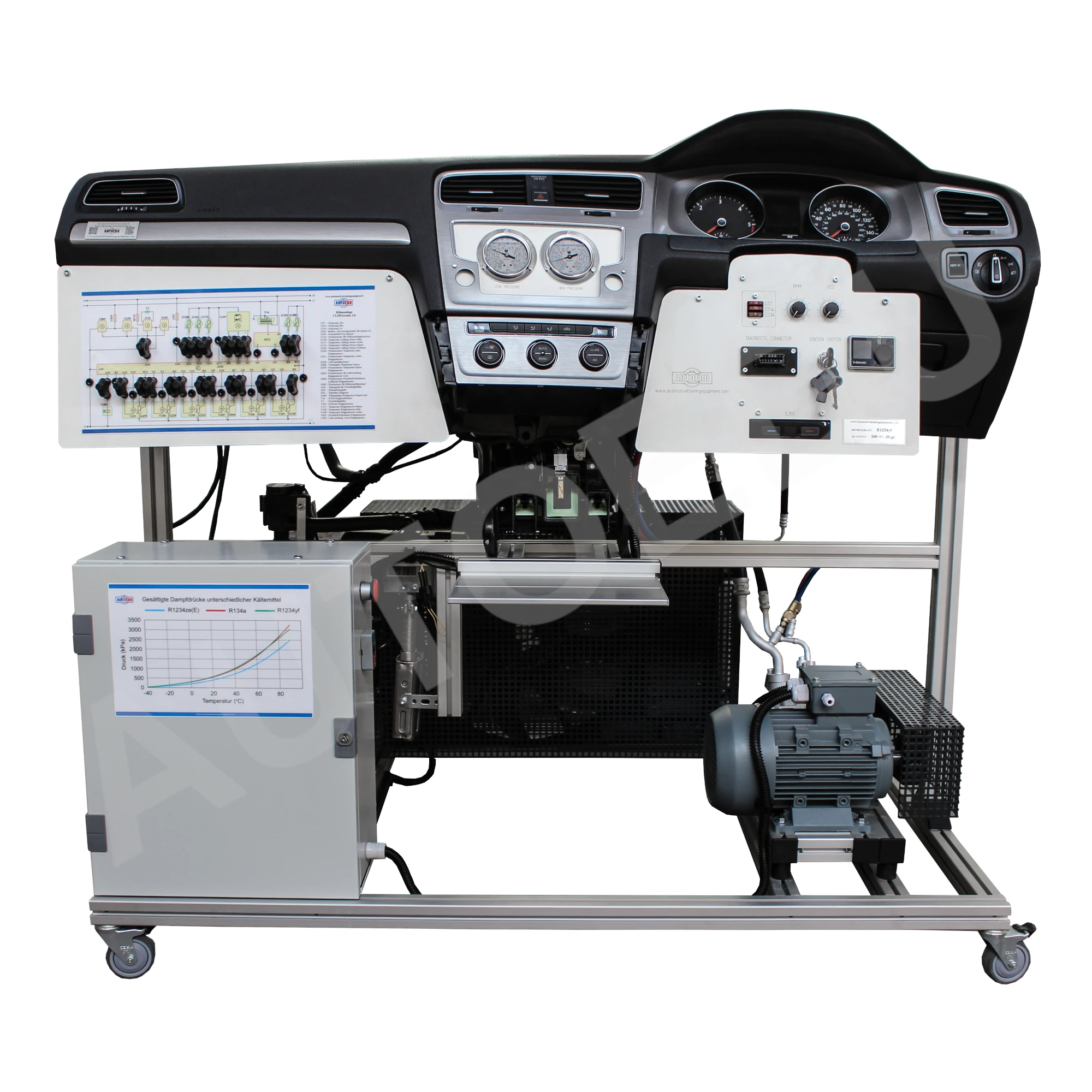
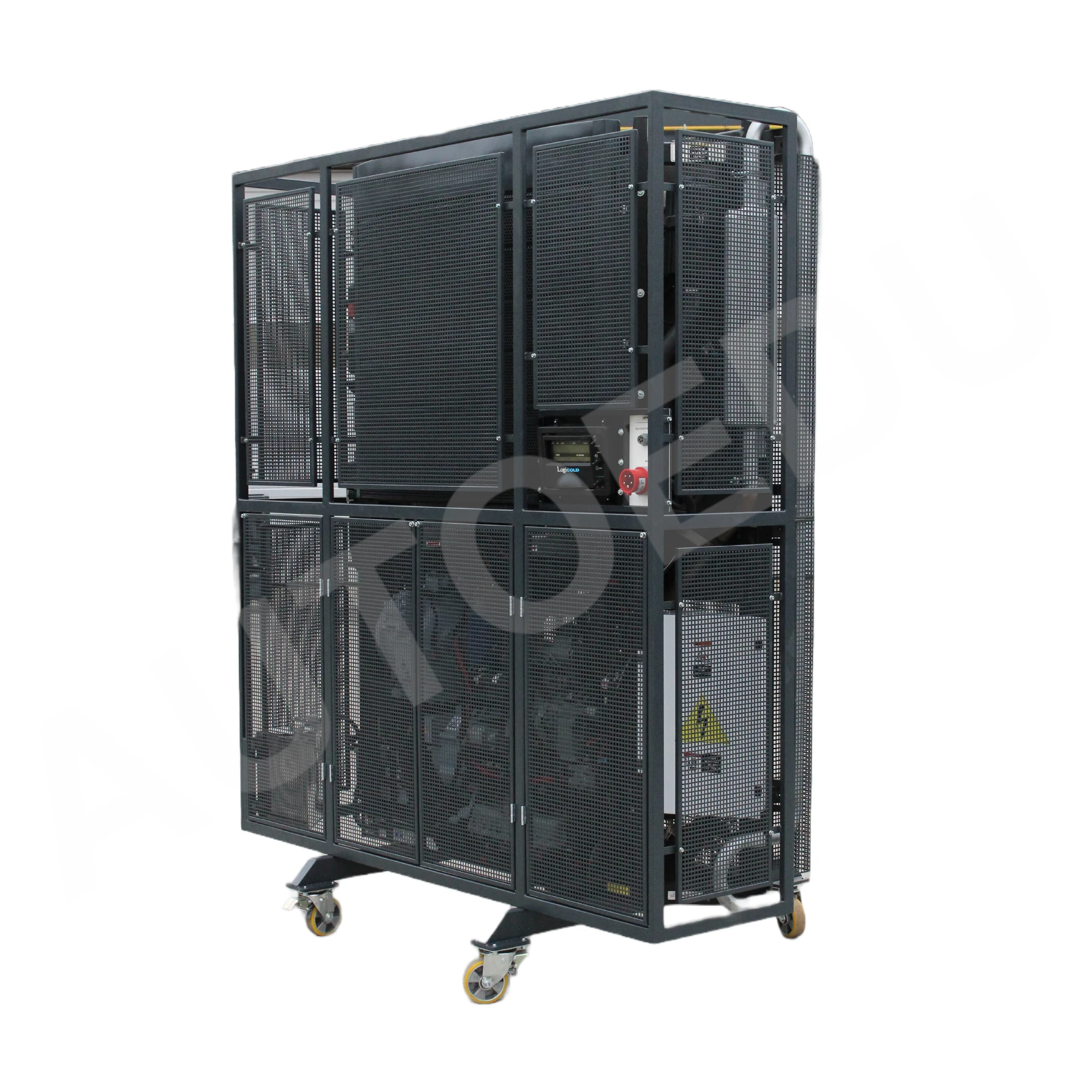
Fully functional Air-Conditioning system trainer with an expansion valve and electronic climate control system CLIMAtronic system, equipped with R134a refrigerant, offers diagnostic capabilities through an OBD 16-pole diagnostic socket and includes open contacts for measuring system components and circuits. Fault code simulations enhance the educational value of this versatile training tool, installed in a mobile aluminum frame, designed specifically for technical and vocational automotive education and training.
Yes. HVAC trainers allow real-time system operation, enabling students to observe pressure variations, compressor load changes, blower performance, and temperature transitions during cooling and heating cycles.
Training systems are used in vocational schools, technical colleges, engineering labs, dealership training centers, and automotive service programs focusing on vehicle electronics and comfort systems.
HVAC training aligns with automotive service qualifications, including refrigerant handling certification, climate system maintenance, and electronic diagnostics. It prepares technicians to work in workshops according to international environmental and safety regulations.
Most trainers use R134a due to simplified handling requirements. Some advanced units use R1234yf to align with modern vehicle standards. Trainers always include certified service ports and pressure gauges.
Yes. Most trainers include OBD/CAN connectivity or direct test points for diagnostic tools, allowing students to read system data, observe live parameters, and perform functional tests similar to real workshop procedures.
Typical fault simulations include:
- Low refrigerant charge.
- High-pressure switch activation.
- Compressor clutch or control valve malfunction.
- Faulty temperature sensor signals.
- Blocked cabin air filters.
- Incorrect blend door positioning.
Yes. Trainers typically include electronic control modules, sensors, stepper motors, and CAN bus communication. Students can read fault codes, test actuators, analyze sensor signals, and simulate faults for training purposes.
Students can practice:
- Measuring high- and low-side pressures.
- Interpreting temperature and pressure readings.
- Identifying refrigerant leaks.
- Recovering, evacuating, and recharging refrigerant.
- Testing sensors, switches, and climate control electronics.
- Diagnosing airflow problems and blend door faults.
- Performing functional tests on compressor and ventilation circuits.
Engine coolant flows through the heater core. The blower motor forces air across the heater core to warm the cabin. Temperature control is achieved through coolant valves, blend doors, or electronic actuators managed by the climate control unit.
The compressor pumps refrigerant through the condenser, where heat is removed. The expansion valve reduces pressure, causing refrigerant to evaporate in the evaporator. This evaporation absorbs heat from cabin air. The blower motor circulates cooled air into the passenger compartment.
Common components include:
- Compressor (electromagnetic or variable displacement).
- Condenser and radiator assembly.
- Expansion valve or orifice tube.
- Evaporator module.
- Blower motor and multi-speed controls.
- Heater core with coolant flow control.
- Refrigerant pressure sensors and temperature sensors.
- Control panel or electronic climate module.
- Service ports for R134a or R1234yf refrigerants.
Modern vehicles rely on complex climate control systems for occupant comfort, safety, and defogging. Training enables learners to understand system operation, master diagnostic techniques, perform pressure measurements, and service refrigerant circuits according to industry standards.
It is an educational platform that replicates a real vehicle HVAC system. It allows students to study air conditioning, heating, ventilation, refrigerant circuits, control electronics, sensors, actuators, and diagnostic procedures in a controlled laboratory environment.